

Please Leave Us A Message
Privacy statement: Your privacy is very important to Us. Our company promises not to disclose your personal information to any external company with out your explicit permission.


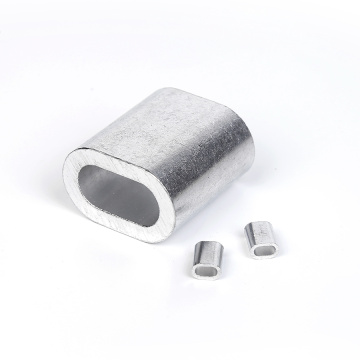
An aluminum sleeve is a cylindrical mechanical fastener designed to join two pieces of wire, rope, or cable together without splicing. Made from lightweight yet durable aluminum alloys, these sleeves provide a reliable compression connection that maintains structural integrity under tension.
In industrial procurement, choosing the right aluminum cable connector sleeve ensures electrical continuity and mechanical strength. Unlike stainless steel alternatives, aluminum sleeves offer significant weight savings, making them ideal for applications where load reduction is critical, such as overhead power lines, marine rigging, and telecommunications infrastructure.
Our supply chain guarantees consistent alloy composition and dimensional accuracy, reducing your risk of connection failure during installation or service life.
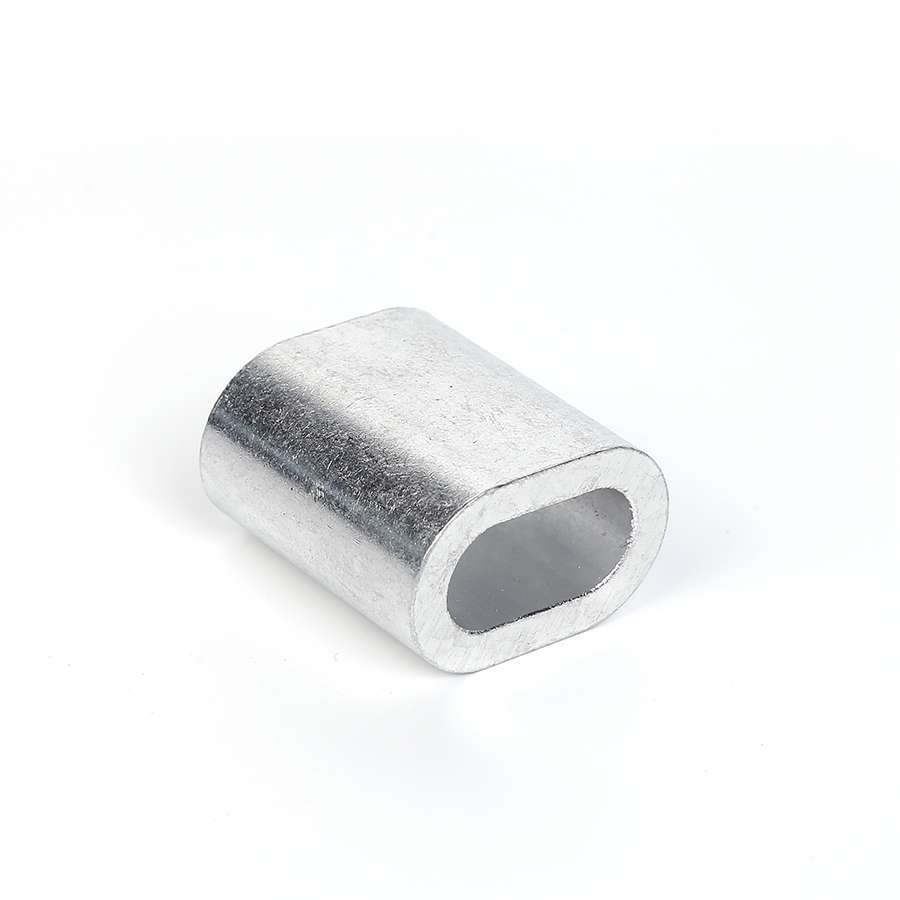
We source high-grade aluminum alloys (typically 1100, 6061, or 6063 series) that meet international standards for tensile strength and corrosion resistance. Each batch undergoes chemical composition verification to ensure consistent performance.
Our aluminum sleeves are manufactured using precision stamping and drawing techniques. This process ensures uniform wall thickness and smooth internal surfaces, which are critical for achieving optimal compression grip when crimped onto cables.
To enhance durability in harsh environments, we offer various surface treatments including anodizing, chromating, or plain finish depending on your application requirements. These treatments extend service life and maintain electrical conductivity.
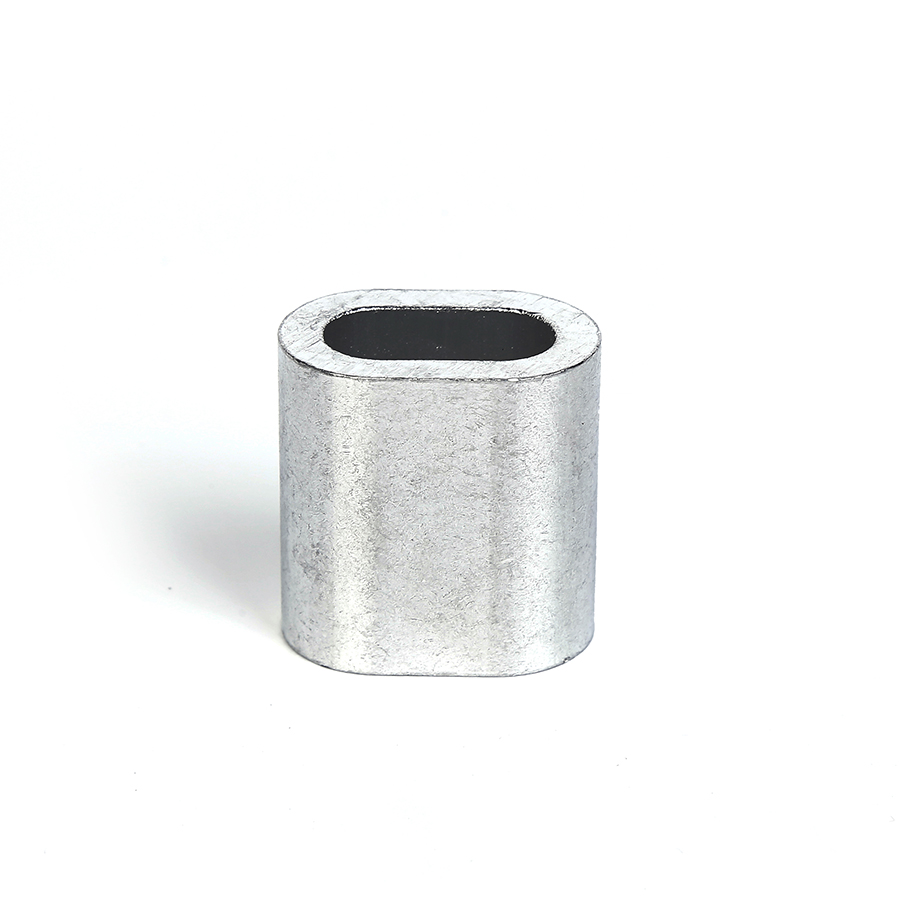
Select a sleeve with an inner diameter that matches your wire or cable outer diameter within ±0.1mm tolerance. Incorrect sizing leads to poor compression grip and potential slippage under load.
For general-purpose connections, 1100 aluminum offers excellent conductivity. For higher mechanical strength applications, consider 6061-T6 alloy sleeves that balance strength with workability.
Determine whether you need hexagonal, round, or oval crimp profiles based on your available tools. Hexagonal crimps provide superior grip and are industry standard for most industrial applications.
For outdoor or marine environments, specify sleeves with appropriate surface treatment or consider coated variants to resist salt spray corrosion and maintain long-term reliability.
Request mill certificates confirming alloy composition (1100, 6061, etc.) and mechanical properties.
Ensure inner diameter tolerances match your wire specifications to guarantee proper crimp compression.
Inspect for burrs, scratches, or inconsistent coating that could compromise connection integrity.
Validate that sleeve geometry matches your crimping tool dies to prevent under or over-compression.
Ensure supplier can meet your volume requirements with consistent quality across large production runs.
Confirm on-time delivery history to avoid production delays in your assembly or installation schedule.
Always test samples with your actual wiring and crimping equipment before committing to bulk orders.
Ensure protective packaging prevents damage during transit, especially for precision-formed sleeves.
Choose suppliers who provide engineering support for sleeve selection, including guidance on alloy choice, crimp force calculations, and compatibility with your specific wire types.
Prioritize suppliers offering complete traceability with material certifications, inspection reports, and compliance documentation for each production batch delivered.
Select manufacturers capable of producing non-standard sizes, special alloys, or custom surface treatments to meet unique application requirements beyond catalog offerings.
Partner with suppliers experienced in international shipping who understand export documentation, customs clearance, and delivery timelines to your region.
Ensure your supplier provides dedicated account management with quick response times for inquiries, technical questions, and order status updates throughout the procurement cycle.
Look for transparent pricing models that offer volume discounts while maintaining quality standards, helping you optimize total cost of ownership without compromising performance.
Aluminum sleeves are extensively used in overhead power lines, substation connections, and cable splicing where lightweight, conductive, and corrosion-resistant joints are essential for grid reliability.
In fiber optic and copper cable installations, aluminum compression sleeves provide secure mechanical connections while maintaining signal integrity over long-distance transmission networks.
Saltwater environments demand corrosion-resistant connections. Aluminum sleeves with appropriate coatings serve as reliable termination points for mooring lines, anchor systems, and deck rigging.
Bridge stay cables, suspension systems, and architectural tension structures utilize aluminum sleeves for joining high-strength wire ropes where weight reduction and fatigue resistance are critical design factors.
Suppliers may substitute lower-grade alloys that lack required tensile strength or conductivity. Always verify alloy designation against your technical specifications before ordering.
Improper inner diameter tolerances or inconsistent wall thickness can cause sleeves to slip under load. Request sample testing with your specific crimping equipment to validate performance.
Uncoated aluminum sleeves degrade rapidly in marine or chemical exposure settings. Specify appropriate surface treatments or protective coatings for demanding operating conditions.
Variations in sleeve dimensions between production batches can disrupt your assembly line. Work with suppliers implementing strict statistical process control to maintain dimensional stability.
Aluminum sleeves are significantly lighter (approximately one-third the weight of stainless steel) and offer excellent electrical conductivity, making them ideal for power transmission applications. Stainless steel sleeves provide higher tensile strength and superior corrosion resistance but are heavier and electrically insulating. Choose aluminum when weight savings and conductivity are priorities; choose stainless steel for maximum mechanical strength in corrosive environments.
Alloy 1100 (pure aluminum) is most common for general-purpose electrical connections due to its excellent conductivity and formability. Alloy 6061-T6 offers higher mechanical strength for structural applications requiring greater tensile capacity. The optimal choice depends on your specific balance of conductivity requirements versus mechanical load demands.
Measure the outer diameter of your wire or cable precisely. Select a sleeve with an inner diameter that matches this measurement within ±0.1mm tolerance. Most manufacturers provide detailed sizing charts correlating wire gauges to recommended sleeve part numbers. When in doubt, request samples to test fit with your actual wiring.
Standard hexagonal crimping tools work with most aluminum compression sleeves. Ensure your tool dies match the sleeve's crimp profile (hex, round, or oval). Hydraulic, manual, and pneumatic crimpers are all suitable depending on production volume. Verify that your tool applies adequate crimp force to achieve proper deformation without damaging the sleeve.
While aluminum naturally forms a protective oxide layer, prolonged exposure to moisture, salt spray, or industrial chemicals can cause degradation. For outdoor or marine applications, specify sleeves with anodized, chromated, or polymer-coated finishes to significantly extend service life and maintain connection integrity.
Standard catalog sizes typically ship within 7-14 business days from confirmed order. Custom sizes or special alloy requirements may require 2-4 weeks for production. Bulk orders exceeding standard inventory levels should be planned with additional lead time to ensure timely delivery to your facility.
Privacy statement: Your privacy is very important to Us. Our company promises not to disclose your personal information to any external company with out your explicit permission.
Fill in more information so that we can get in touch with you faster
Privacy statement: Your privacy is very important to Us. Our company promises not to disclose your personal information to any external company with out your explicit permission.