




Please Leave Us A Message
Privacy statement: Your privacy is very important to Us. Our company promises not to disclose your personal information to any external company with out your explicit permission.


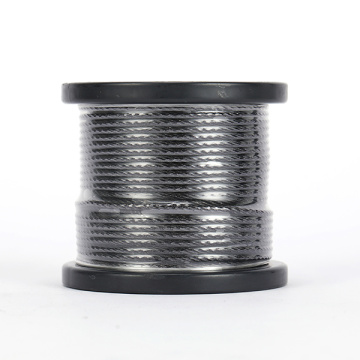




Annealed wire is a metal wire that has been heated to a specific temperature and then slowly cooled in a controlled process. This thermal treatment fundamentally alters the physical properties of the material, significantly reducing its hardness while dramatically increasing its ductility and flexibility. For procurement professionals sourcing materials for construction, agriculture, or manufacturing, understanding this distinction is critical.
Unlike high-tensile steel wire which remains rigid and brittle, annealed wire is soft enough to be bent, twisted, and woven by hand or machine without snapping. In the context of industrial stainless steel wire applications, buyers often specify annealed grades when the end-product requires forming—such as mesh fencing, binding ties, or decorative rigging—where raw strength is secondary to workability.
Our supply chain ensures that every batch of annealed wire meets precise metallurgical standards, guaranteeing consistent performance across your production lines. By selecting the correct annealing grade, you reduce waste during fabrication and extend the lifespan of your tooling.
At Chenglu Stainless Steel Products Co., Ltd., quality assurance is embedded into every stage of the annealing process. We utilize advanced continuous annealing furnaces that maintain uniform temperature distribution, preventing weak spots or inconsistencies that can lead to premature failure in finished products.
Our rigorous testing protocols include tensile strength analysis, surface defect inspection, and diameter tolerance verification. This commitment to precision allows us to serve demanding industries such as pharmaceuticals, food processing, and chemical engineering, where material integrity is non-negotiable.

Selecting the appropriate annealed wire involves balancing mechanical requirements with cost efficiency. Buyers must consider the intended application—whether it is simple binding, complex weaving, or structural reinforcement—to determine the necessary level of softness and tensile strength.
Low-carbon steel wires offer excellent formability for general-purpose use, while stainless steel variants provide corrosion resistance for harsh environments. Consult our technical team to match the alloy composition to your environmental conditions.
Precision matters. Standard tolerances suit most industrial needs, but tight-tolerance wires are essential for automated machinery feeding systems to prevent jams and downtime.
Bright annealed wire offers a clean, reflective surface suitable for visible applications. Black annealed wire provides a matte finish that accepts paint and coatings more readily.
Coil weight and packaging method affect logistics costs and on-site handling. We offer custom coil sizes to fit your existing storage and dispensing equipment.

When sourcing annealed wire, prioritize suppliers who offer technical support alongside product delivery. A partner like Chenglu Stainless Steel can help you optimize your bill of materials by suggesting alternative grades that meet performance specs at a lower landed cost.
Always request samples before committing to large volume orders. Testing the wire in your actual production environment reveals nuances in bend radius and fatigue resistance that datasheets alone cannot predict.
Use this checklist to evaluate potential suppliers and ensure your next order meets all operational and compliance requirements. This framework helps standardize the evaluation process across your procurement team.
Verify diameter, tensile strength, and elongation data matches your engineering drawings.
Confirm MTRs (Mill Test Reports) and any industry-specific certifications (ISO, CE).
Assess production capacity and current backlog to ensure on-time delivery.
Check if the supplier accommodates trial orders or varying coil weights.
Ensure free or low-cost samples are available for pre-production testing.
Evaluate packaging durability and shipping options to minimize damage risk.
Even with careful planning, issues can arise during the sourcing and usage of annealed wire. Proactively addressing these common pitfalls can save significant time and money.
The versatility of annealed wire makes it indispensable across a wide range of sectors. Chenglu Stainless Steel Products serves diverse industries with tailored solutions.
Used extensively for binding rebar, creating wire mesh, and manufacturing chain-link fences. The softness allows for easy manual tying and machine weaving.
Ideal for trellising crops, livestock fencing, and bundling hay bales. Corrosion-resistant stainless variants ensure longevity in outdoor environments.
Stainless steel annealed wire is used in conveyor belts, filters, and kitchen equipment due to its hygiene and ease of cleaning.
High-purity wire is utilized in filtration systems and specialized medical devices where contamination risks must be minimized.
Resistant to various chemicals, this wire is used in basket weaving for filtration and as reinforcement in corrosive tank linings.
Artisans use bright annealed wire for sculpture and jewelry making due to its malleability and attractive finish.
Choosing the right supplier is as important as choosing the right material. Chenglu Stainless Steel Products Co., Ltd. combines manufacturing excellence with customer-centric service to deliver superior value.
Our state-of-the-art facilities in Xinghua City, Jiangsu Province, allow for precise control over the annealing process, ensuring consistent quality across large volumes.
We adhere to international standards and provide full documentation, simplifying your import and compliance processes regardless of your location.
Our experienced team provides guidance on material selection, helping you optimize performance and reduce costs through informed decisions.
With convenient transportation links and efficient packaging methods, we ensure your orders arrive on time and in perfect condition.
Get quick answers to common questions about annealed wire specifications, ordering, and usage.
Privacy statement: Your privacy is very important to Us. Our company promises not to disclose your personal information to any external company with out your explicit permission.
Fill in more information so that we can get in touch with you faster
Privacy statement: Your privacy is very important to Us. Our company promises not to disclose your personal information to any external company with out your explicit permission.