




Please Leave Us A Message
Privacy statement: Your privacy is very important to Us. Our company promises not to disclose your personal information to any external company with out your explicit permission.


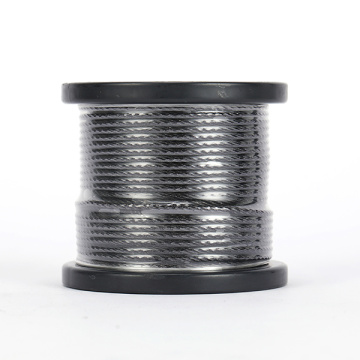


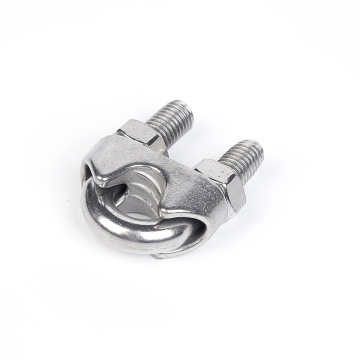


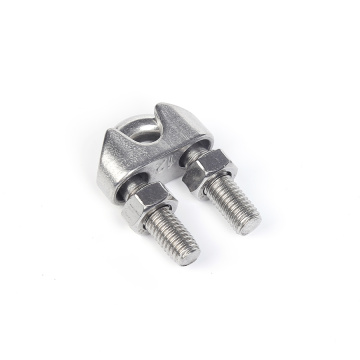
Flux core wire is a specialized type of welding consumable designed for high-efficiency metal joining. Unlike standard solid wires, flux core arc welding (FCAW) uses a tubular wire filled with flux ingredients that create a shielding gas and slag layer during the welding process.
This technology is critical for industrial applications where penetration depth and deposition rates matter most. For procurement managers, choosing the right flux core wire directly impacts production speed and weld integrity in heavy-duty environments.
The flux mixture inside the wire provides deoxidizers, alloying elements, and ionizing agents. This ensures stable arcs even in windy outdoor conditions or on slightly contaminated surfaces.
FCAW offers deeper penetration and faster travel speeds compared to MIG welding. This reduces heat input and minimizes distortion in thick materials, saving time on large fabrication projects.
At Chenglu Stainless Steel Products Co., Ltd., our manufacturing process for flux core wire and stainless steel welding products adheres to rigorous international standards. We prioritize consistency in every batch to ensure your production line never stops due to material defects.
We utilize state-of-the-art drawing and filling equipment to maintain precise dimensional tolerances. This precision ensures smooth feeding through your welding robots and automated systems.
Every spool undergoes strict quality control checks, including tensile strength testing and chemical composition analysis. Our experienced technical team verifies that each product meets specified mechanical properties.
Using high-grade stainless steel raw materials, we ensure corrosion resistance and durability. This is essential for industries like food processing and pharmaceuticals where hygiene standards are paramount.
Selecting the correct flux core wire requires understanding your base metal, operating environment, and desired weld characteristics. Making the wrong choice can lead to excessive spatter, poor fusion, or premature failure of the joint.
Metal-Cored (Gas Shielded): Offers lower spatter and smoother arcs, ideal for automated robotic welding in controlled shop environments. Best for high-volume production where finish quality is critical.
Flux-Cored (Self-Shielded): No external gas cylinder needed. Perfect for outdoor construction, repair work, or windy conditions where gas shields would be blown away. Provides deep penetration for thick sections.
Wire diameter (typically 0.8mm to 4.8mm) determines the current range you can use. Thinner wires allow for precise control on thin gauge metals, while thicker wires maximize deposition rates for heavy structural steel.
Match your power source capacity and material thickness to the wire specification to avoid burn-through or lack of fusion.
Before placing a bulk order for flux core wire, verify these critical factors to mitigate supply chain risks and ensure operational continuity.
Sourcing welding consumables globally often presents challenges. Understanding these common pitfalls helps you negotiate better terms and select reliable partners.
The Issue: Variations in flux density or wire diameter between batches cause unstable arcs and inconsistent weld beads.
Solution: Request sample testing before bulk orders. Choose suppliers with automated quality control systems rather than manual processes.
The Issue: Flux core wire is hygroscopic. Poor packaging leads to moisture uptake, causing porosity and hydrogen-induced cracking in welds.
Solution: Inspect packaging seals upon arrival. Store wire in dry environments and re-bake if exposure occurred.
The Issue: Low unit prices masked by expensive freight or customs duties for heavy, dense welding materials.
Solution: Calculate landed cost per kilogram, not just unit price. Negotiate Incoterms that clarify responsibility for insurance and duties.
When evaluating potential flux core wire manufacturers, look beyond price. A true partner provides technical support, consistent quality, and transparent communication.
Located in Xinghua City, Jiangsu Province, Chenglu specializes in high-quality stainless steel products, including welding wires and rigging.
Why They Stand Out:
Production Capacity: Ensure the supplier has advanced equipment to handle your volume requirements without delays.
Technical Support: A good supplier offers troubleshooting assistance for welding parameters and defect resolution.
Industry Experience: Look for proven track records in sectors similar to yours (construction, heavy machinery, or precision manufacturing).
Get answers to common technical and logistical questions about flux core wire sourcing and application.
MIG (Metal Inert Gas) welding uses a solid wire and an external shielding gas cylinder. Flux Core welding uses a tubular wire filled with flux. Flux core is generally more portable and wind-resistant, while MIG offers cleaner welds with less spatter in indoor settings.
Yes, specifically designed stainless steel flux core wires are available. These wires contain alloying elements like chromium and nickel to match the corrosion resistance and mechanical properties of stainless steel base metals. Chenglu specializes in such high-performance stainless steel welding products.
Store wire in a cool, dry place away from direct sunlight and temperature fluctuations. Keep it in original sealed packaging until ready to use. If packaging is compromised, consider baking the wire according to manufacturer specifications to remove moisture before welding.
Common diameters range from 0.8mm to 1.2mm for light to medium duty work, and 2.4mm to 4.8mm for heavy structural steel. The choice depends on material thickness and required deposition rate. Our factory supports various sizes to meet diverse client needs.
Privacy statement: Your privacy is very important to Us. Our company promises not to disclose your personal information to any external company with out your explicit permission.
Fill in more information so that we can get in touch with you faster
Privacy statement: Your privacy is very important to Us. Our company promises not to disclose your personal information to any external company with out your explicit permission.