




Please Leave Us A Message
Privacy statement: Your privacy is very important to Us. Our company promises not to disclose your personal information to any external company with out your explicit permission.


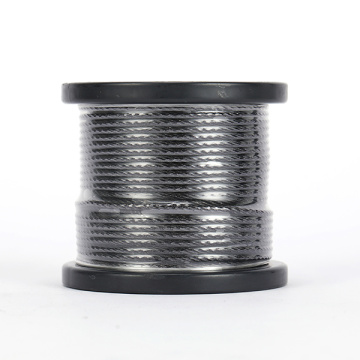




Flux wire is a specialized type of welding consumable designed to create a protective gaseous shield around the weld pool, eliminating the need for external shielding gas cylinders. This makes it an ideal solution for outdoor applications or environments where wind might otherwise disrupt standard MIG welding processes.
At Chenglu Stainless Steel Products Co., Ltd., we understand that consistent arc stability and slag removal are critical for structural integrity. Our flux wires are engineered to provide deep penetration and smooth bead appearance, ensuring your fabrication projects meet rigorous industrial standards without the logistical burden of gas supply management.
By choosing the right flux-cored wire, procurement teams can significantly reduce downtime associated with gas refills and equipment maintenance, streamlining the welding workflow for high-volume production lines.
Precision in alloying elements ensures predictable mechanical properties. We strictly control carbon, manganese, and silicon levels to guarantee tensile strength and impact resistance that match international specifications.
Uniform wire diameter and roundness are vital for automated welding systems. Our advanced drawing and packaging processes minimize jamming in feed mechanisms, reducing machine downtime and labor costs.
A well-formulated flux core produces loose, easily removable slag. This feature accelerates post-weld cleaning times, directly improving operator productivity and lowering per-unit fabrication costs.
Every batch undergoes strict quality checks for porosity, crack sensitivity, and diffusion hydrogen content. This ensures that every spool delivered meets the highest reliability standards for critical structural welds.
Select a flux wire specifically formulated for your base metal. Whether welding mild steel, low-alloy steel, or stainless steel, using the correct consumable prevents cracking and ensures optimal corrosion resistance in the final assembly.
Consider the welding position required for your project. Some flux wires are designed for flat and horizontal fillet positions only, while others offer versatile all-position capabilities, providing flexibility for complex structural assemblies.
Determine if you need a self-shielded wire (no external gas) or a dual-shield wire (requiring CO2 or Ar/CO2 mix). Self-shielded options are superior for windy outdoor conditions, while dual-shield wires often provide smoother arcs and lower spatter.
Match the wire diameter (e.g., 0.8mm, 1.0mm, 1.2mm) to your power source capacity and material thickness. Thinner wires suit sheet metal and light fabrication, while thicker diameters handle heavy-duty structural steel and pipe welding.
Symptom: Frequent jams in the welding feeder.
Solution: Ensure proper storage conditions and use reels with adequate tension controls. High-quality manufacturing reduces internal stress in the wire, preventing tangles during unspooling.
Symptom: Large amounts of molten metal droplets adhering to the workpiece.
Solution: Adjust voltage and wire speed settings to achieve a stable arc. Using premium flux wires with optimized deoxidizers significantly reduces spatter, lowering post-weld cleanup time.
Symptom: Small holes or voids within the weld metal.
Solution: Check for excessive draft or wind interference. For self-shielded wires, maintaining a consistent stick-out length and avoiding contaminated base materials are essential to prevent gas-related defects.
Symptom: Shallow or uneven fusion into the base metal.
Solution: Verify that the amperage matches the wire diameter specification. Inconsistent flux distribution in low-quality wires can lead to erratic arc characteristics and poor fusion.
Prioritize suppliers with in-house production facilities rather than simple traders. Direct manufacturing allows for better quality control over the powder filling process and wire drawing, ensuring consistent product performance.
Choose partners with established export experience and efficient logistics channels. Reliable shipping partners ensure that your orders arrive on time and in perfect condition, regardless of your location.
A supplier offering a wide range of welding consumables allows for simplified procurement. Consolidating orders with a single vendor who specializes in stainless steel and carbon steel products reduces administrative overhead.
Look for manufacturers with a history of supplying major industries such as construction, shipbuilding, and heavy machinery. Their experience translates to products that are battle-tested in demanding environments.
Used extensively in steel structure erection, bridge building, and skyscraper frameworks where high-strength, all-position welding is required for safety and durability.
Essential for hull construction and offshore platform maintenance. The ability to weld in windy marine environments makes flux wire indispensable for shipyards.
Critical for laying oil, gas, and water pipelines. High-deposition flux wires allow for rapid progress in field welding conditions, ensuring secure and leak-proof joints.
Used to manufacture and repair heavy machinery subject to extreme wear and tear. The toughness of flux wire welds withstands the abrasive conditions of mining operations.
Applied in the maintenance and construction of rail tracks, locomotives, and rolling stock, ensuring the structural integrity required for safe transportation.
Facilitates the repair of tractors, harvesters, and plows in field service conditions where portable, gas-free welding solutions are necessary for quick turnaround.
Self-shielded flux wires generate their own protective gas shield from the burning flux core, making them ideal for outdoor use where wind could blow away external gas. Dual-shield wires require an external shielding gas (usually CO2) to supplement the flux, often resulting in a smoother arc and less spatter, but they are best suited for indoor or sheltered environments.
Generally, flux wire is not recommended for very thin sheet metal (under 2mm) because it tends to produce higher heat input and more spatter than solid MIG wire. However, specialized thin-gauge flux wires are available for specific light fabrication tasks.
Flux wire should be stored in a cool, dry place away from direct sunlight and moisture. Once the vacuum seal is broken, it is advisable to use the wire quickly or store it in a drying oven to prevent humidity absorption, which can lead to porosity in the weld.
While flux wire does produce slag that must be removed, modern formulations are designed for easy slag detachment. Most slag flakes off naturally upon cooling or can be removed quickly with a chipping hammer and wire brush, keeping downtime minimal.
Flux welding generates fumes and smoke. It is essential to use adequate ventilation, such as local exhaust systems or fume extractors, and wear appropriate respiratory protection, eye protection, and flame-resistant clothing to ensure operator safety.
Privacy statement: Your privacy is very important to Us. Our company promises not to disclose your personal information to any external company with out your explicit permission.
Fill in more information so that we can get in touch with you faster
Privacy statement: Your privacy is very important to Us. Our company promises not to disclose your personal information to any external company with out your explicit permission.