




Please Leave Us A Message
Privacy statement: Your privacy is very important to Us. Our company promises not to disclose your personal information to any external company with out your explicit permission.


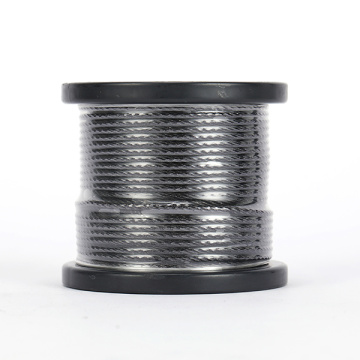




Gas shielded welding wire is a consumable electrode used in Metal Inert Gas (MIG) and Metal Active Gas (MAG) welding processes. Unlike flux-cored wires that rely on a chemical coating to create a shielding gas, this type of wire requires an external cylinder of shielding gas—typically Argon, Carbon Dioxide, or a mixture—to protect the molten weld pool from atmospheric contamination.
This technology is the industry standard for high-quality stainless steel fabrication. By using a continuous wire feed combined with precise gas flow, manufacturers achieve deep penetration, smooth bead appearance, and minimal spatter. For procurement teams, this means higher throughput and less post-weld cleanup time, directly reducing your labor costs per unit.
The primary advantage of gas shielded wire is consistency. Because the shielding comes from a controlled gas source rather than a flux core, the chemical composition of the weld metal remains stable and predictable. This stability is critical when welding corrosion-resistant materials like stainless steel, where maintaining the correct chromium-to-nickel ratio is essential for rust prevention.
Chenglu Stainless Steel Products Co., Ltd. specializes in producing high-grade stainless steel welding wires designed to work seamlessly with standard MIG/MAG equipment. Our products ensure that your production line maintains high efficiency without compromising the structural integrity or aesthetic finish required by demanding industries like food processing and pharmaceuticals.
At Chenglu Stainless Steel Products Co., Ltd., quality is not just a checkpoint; it is embedded in our manufacturing DNA. Located in Xinghua City, Jiangsu Province—a hub for China's stainless steel industry—we leverage advanced production equipment and rigorous testing instruments to deliver welding wires that meet international standards.
Our facility utilizes state-of-the-art drawing machines and annealing furnaces. This ensures that every meter of stainless steel wire has uniform tensile strength and consistent diameter tolerance, reducing wire feeding issues and downtime on automated welding robots.
Every batch undergoes strict chemical analysis and mechanical testing. We verify corrosion resistance, tensile strength, and ductility before shipment. This proactive quality control minimizes the risk of defective welds in your final assembly, protecting your brand reputation.
Our R&D team continuously optimizes product structures based on real-world welding performance. We don't just manufacture wire; we engineer solutions that improve arc stability and reduce spatter, helping you lower your total cost of ownership.
Selecting the correct gas shielded welding wire is critical for ensuring weld integrity and cost-efficiency. With numerous grades and alloys available, buyers must align technical specifications with their specific application requirements. Here is a comprehensive guide to making the right choice.
The most common grades are 304 (AISI 304 / EN 1.4301) and 316 (AISI 316 / EN 1.4401). 304 offers excellent general corrosion resistance and is ideal for food processing equipment and architectural applications. 316 contains molybdenum, providing superior resistance to chlorides and acidic environments, making it essential for pharmaceutical machinery, chemical tanks, and marine hardware.
The choice of shielding gas significantly impacts weld characteristics. For stainless steel, a ternary mixture (Argon + CO2 + O2) is often preferred over pure Argon or Argon/CO2 blends. This mixture stabilizes the arc, improves wetting action, and reduces spatter. Ensure your wire specification matches the gas mix available in your facility to avoid porosity or lack of fusion.
Common diameters range from 0.8mm to 1.2mm. Thinner wires (0.8mm) are suitable for light gauge sheet metal and precision work, offering faster travel speeds. Thicker wires (1.0mm - 1.2mm) provide higher deposition rates and deeper penetration, ideal for structural components and heavy fabrication. Match the diameter to your material thickness and joint design.
For stainless steel, surface cleanliness is paramount. Any oil, grease, or carbon contamination on the wire can lead to weld defects. High-quality wires from reputable suppliers like Chenglu come with clean, oxide-free surfaces that ensure consistent electrical conductivity and arc stability, resulting in smoother weld beads and less post-weld grinding.
Before finalizing your purchase order for gas shielded welding wire, use this checklist to evaluate potential suppliers and products. This ensures you mitigate risk and secure the best value for your procurement budget.
Request Mill Test Certificates (MTC) for every batch. Verify that the Cr, Ni, Mo, and C percentages match the specified grade (e.g., 304 vs 316). Even minor deviations can compromise corrosion resistance.
Ask about diameter tolerance levels. Tighter tolerances (e.g., +/- 0.02mm) ensure smoother feeding in automated systems, reducing jams and maintenance costs.
Confirm standard lead times for both stock items and custom orders. Reliable suppliers maintain buffer stock of common grades (304, 316) to prevent production stoppages.
Look for suppliers with a proven track record in your industry. Chenglu Stainless Steel Products Co., Ltd. serves food, pharma, and chemical sectors, demonstrating our capability to meet diverse regulatory standards.
Stainless steel gas shielded welding wire is indispensable across industries where hygiene, durability, and corrosion resistance are non-negotiable. Chenglu's products are trusted by manufacturers worldwide for their reliability in these key sectors.
Used for fabricating conveyor belts, mixing tanks, and piping systems. The welds must be smooth and hygienic to prevent bacterial growth, meeting strict FDA and EHEDG guidelines.
Essential for bioreactors, sterile fluid handling systems, and cleanroom infrastructure. High-purity 316L wire is often required to ensure zero contamination risks in drug manufacturing.
Used for storage tanks, pressure vessels, and reaction kettles exposed to corrosive chemicals. The weld integrity must withstand high pressures and aggressive chemical environments.
Ideal for structural steelwork, handrails, and facades. Provides strong, aesthetically pleasing welds that resist weathering and maintain their appearance over decades.
Critical for fermenters, pasteurizers, and bottling lines. Ensures no metallic taste transfer and maintains sanitary conditions throughout the beverage production process.
Used in solar panel mounting structures and wind turbine components. Provides durable connections that can withstand harsh outdoor environmental conditions.
Choosing the right supplier is as important as choosing the right wire. When evaluating potential partners for gas shielded welding wire, look for a company that combines manufacturing expertise with a commitment to customer-centric service.
Based in Xinghua City, Jiangsu Province, Chenglu has built a reputation for "integrity-based, innovation-based" corporate spirit. Our strategic location provides convenient transportation logistics, ensuring timely delivery to global clients.
When selecting a new supplier, prioritize those who offer:
Frequently asked questions from procurement professionals regarding gas shielded welding wire specifications, usage, and sourcing.
Both MIG (Metal Inert Gas) and MAG (Metal Active Gas) use gas shielded welding wire. The difference lies in the shielding gas. MIG uses inert gases like Argon, typically for non-ferrous metals like aluminum. MAG uses active gases like CO2 or Oxygen mixtures, commonly used for steel and stainless steel to stabilize the arc and improve penetration. For stainless steel, MAG is the standard terminology.
While flux-cored wires exist for stainless steel, gas shielded MIG/MAG wire generally produces higher quality welds with less spatter and better aesthetics. Flux-cored wires can be more sensitive to wind and drafts, making them less suitable for outdoor work. For indoor fabrication and high-spec applications like food or pharma equipment, gas shielded wire is the preferred choice for its consistency and clean weld profile.
Stainless steel welding wire has a long shelf life if stored correctly. It should be kept in a dry, cool environment away from corrosive agents. If properly packaged and stored, it can last several years without degradation. However, once opened, it is best to use the wire within a reasonable timeframe to prevent surface contamination from humidity or oils.
Yes, we understand that large-scale industrial buyers have specific logistical needs. We can accommodate custom packaging requirements, including larger reel sizes or specialized crating for container shipping, to optimize your storage and handling efficiency.
Always request the Mill Test Certificate (MTC) from the supplier before or with the shipment. The MTC will detail the chemical composition (Cr, Ni, Mo, C, etc.) and mechanical properties. You can also perform a simple spot check with a handheld XRF analyzer if available, but the MTC from a reputable manufacturer like Chenglu is the primary document of record.
Privacy statement: Your privacy is very important to Us. Our company promises not to disclose your personal information to any external company with out your explicit permission.
Fill in more information so that we can get in touch with you faster
Privacy statement: Your privacy is very important to Us. Our company promises not to disclose your personal information to any external company with out your explicit permission.