




Please Leave Us A Message
Privacy statement: Your privacy is very important to Us. Our company promises not to disclose your personal information to any external company with out your explicit permission.


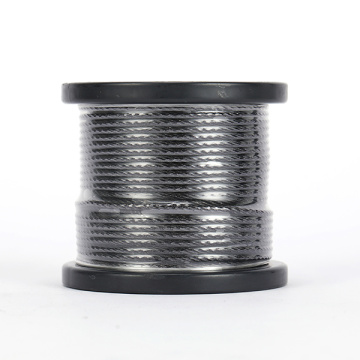




Micro wire refers to extremely thin stainless steel wires, typically with diameters ranging from 0.01mm to 1.0mm. Unlike standard industrial wire, micro wire requires specialized manufacturing processes to maintain structural integrity at such small scales. For procurement teams in high-tech industries, understanding the distinction between micro wire and regular wire is critical for ensuring component reliability.
At Chenglu Stainless Steel Products Co., Ltd., we specialize in producing high-quality stainless steel micro wire that meets rigorous international standards. Our advanced production equipment ensures consistent diameter tolerance, surface finish, and mechanical properties—essential factors for applications in electronics, medical devices, aerospace, and precision instrumentation.
The global demand for micro wire continues to grow as miniaturization becomes a key trend across multiple industries. Buyers who source from experienced manufacturers like Chenglu gain access to products that reduce assembly risks, improve yield rates, and support innovation in compact design solutions.
Our commitment to precision stainless steel wire manufacturing means every batch undergoes thorough testing to verify tensile strength, elongation, and corrosion resistance. This dedication to quality helps your supply chain remain resilient against defects and production delays.
Chenglu utilizes cutting-edge drawing machines and annealing furnaces specifically calibrated for micro wire dimensions. This investment enables us to achieve tight tolerances of ±0.005mm on diameters as small as 0.01mm, ensuring consistency that supports automated assembly processes.
Every production batch undergoes multi-stage inspection including dimensional verification, surface defect analysis, tensile testing, and corrosion resistance evaluation. Our experienced technical team monitors each process step to guarantee compliance with international standards such as ASTM, EN, and JIS specifications.
We source only certified stainless steel grades including 304, 316L, 321, and specialty alloys optimized for micro wire applications. Each incoming material lot is verified for chemical composition and metallurgical structure before entering production.
Our clean-room facilities minimize contamination risks during the final drawing and packaging stages. Environmental controls ensure that surface quality remains uncompromised, reducing scrap rates and improving overall cost efficiency for bulk orders.
Selecting the correct micro wire supplier involves evaluating several critical factors beyond price alone. Procurement professionals must assess a manufacturer's technical capabilities, quality systems, and ability to scale production according to your specific requirements.
Verify that the supplier possesses specialized equipment for drawing wires below 0.1mm diameter. Ask about their minimum achievable tolerance, surface finish options, and whether they offer custom alloy formulations for demanding applications.
Ensure the manufacturer holds relevant certifications and maintains documented quality management systems. Request test reports and material certificates for each shipment to validate compliance with your industry standards.
Confirm the supplier can handle volume fluctuations without compromising quality. Inquire about lead times for standard and rush orders, inventory policies, and contingency plans for capacity constraints.
Partnering with an established manufacturer like Chenglu Stainless Steel Products Co., Ltd. provides buyers with confidence in supply chain stability. With over a decade of experience serving food processing, pharmaceuticals, chemicals, brewing, and construction sectors, we understand the unique demands of diverse industries and deliver solutions that meet exacting specifications.
Use this comprehensive checklist when evaluating potential micro wire suppliers to ensure you select a partner capable of meeting your quality, delivery, and cost requirements.
□ Confirm acceptable tolerance ranges match your application needs
□ Request sample measurements with calibration certificates
□ Verify measurement methodology and equipment accuracy
□ Define acceptable surface finish specifications
□ Review surface defect criteria and rejection thresholds
□ Inspect samples under magnification for scratches or inconsistencies
□ Specify required tensile strength and elongation values
□ Confirm heat treatment processes used for temper conditions
□ Request mill test reports for mechanical property data
□ Match alloy grade to operating environment conditions
□ Request salt spray or immersion test results
□ Verify suitability for chemical exposure scenarios
□ Ensure protective packaging prevents damage during transit
□ Verify reel or coil specifications match your unwinding equipment
□ Confirm labeling includes traceability information
□ Assess production capacity and current order backlog
□ Review on-time delivery track record
□ Evaluate communication responsiveness and problem-solving capability
Many buyers encounter variations in wire diameter that cause feed mechanisms to jam or produce defective components. This issue often stems from suppliers lacking precision drawing equipment or adequate quality control procedures.
Solution: Partner with manufacturers who employ computer-controlled drawing machines and implement real-time diameter monitoring systems to maintain consistent tolerances throughout the entire production run.
Scratches, pits, or particulate contamination on micro wire surfaces can compromise product performance in sensitive applications like medical devices or semiconductor manufacturing, leading to costly recalls or field failures.
Solution: Source from suppliers with clean-room finishing capabilities and rigorous surface inspection protocols. Require suppliers to provide detailed surface quality documentation with each shipment.
Generic suppliers often lack the engineering expertise to advise on alloy selection, temper conditions, or packaging requirements specific to micro wire applications, resulting in suboptimal product choices and increased total cost of ownership.
Solution: Work with manufacturers that employ experienced technical teams capable of providing application-specific recommendations and troubleshooting assistance throughout the procurement lifecycle.
Unreliable lead times and sudden capacity constraints can disrupt production schedules, especially for time-sensitive projects requiring precise coordination with downstream manufacturing operations.
Solution: Establish relationships with suppliers who maintain strategic raw material inventories, demonstrate proven scalability, and communicate proactively about potential scheduling impacts.
When evaluating potential micro wire suppliers, industry experts recommend prioritizing manufacturers with demonstrated expertise, robust quality systems, and a track record of reliable delivery. The following recommendations highlight key criteria for selecting the right partner.
Located in Xinghua City, Jiangsu Province, Chenglu has built a reputation for producing high-quality stainless steel products including micro wire, wire rope, chains, and welding wire. Their commitment to customer-centric service and continuous improvement makes them a preferred supplier for global buyers.
Industry best practices suggest evaluating potential micro wire suppliers against these essential benchmarks:
Micro wire typically refers to stainless steel wires with diameters ranging from 0.01mm to 1.0mm. These ultra-fine dimensions require specialized manufacturing processes and precision equipment to maintain consistent tolerances and surface quality suitable for high-precision applications.
The most widely used grades include 304 and 316L for general corrosion resistance, 321 for elevated temperature applications, and specialty alloys like 17-7 PH for high-strength requirements. Your application environment, mechanical demands, and budget constraints determine the optimal grade selection.
Premium manufacturers like Chenglu can achieve diameter tolerances of ±0.005mm or tighter for wires as small as 0.01mm. Tighter tolerances may require longer lead times and higher costs, so it is essential to specify only the precision your application actually requires.
Temper condition determines the wire's hardness, tensile strength, and flexibility. Spring temper offers maximum strength for springs and contacts, while full hard provides rigidity for structural applications. Soft or annealed tempers enable forming operations but sacrifice some strength. Consult with your supplier to select the appropriate temper for your use case.
Micro wire is commonly supplied on reels, coils, or spools sized to match your unwinding equipment. Standard reel diameters range from 100mm to 300mm, with custom sizes available for specialized machinery. Protective packaging prevents tangling and surface damage during storage and transportation.
Yes, experienced manufacturers can develop custom alloy formulations tailored to specific requirements such as enhanced conductivity, magnetic properties, or extreme corrosion resistance. While custom alloys typically involve higher minimum order quantities and longer development timelines, they enable unique product innovations.
Reputable suppliers provide mill test reports detailing chemical composition, mechanical properties, and dimensional measurements. Additional documentation may include material certificates, surface quality inspection records, and compliance statements verifying adherence to relevant industry standards and regulations.
Privacy statement: Your privacy is very important to Us. Our company promises not to disclose your personal information to any external company with out your explicit permission.
Fill in more information so that we can get in touch with you faster
Privacy statement: Your privacy is very important to Us. Our company promises not to disclose your personal information to any external company with out your explicit permission.