




Please Leave Us A Message
Privacy statement: Your privacy is very important to Us. Our company promises not to disclose your personal information to any external company with out your explicit permission.


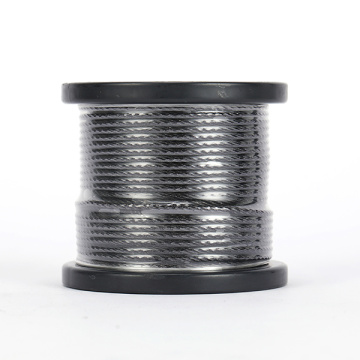


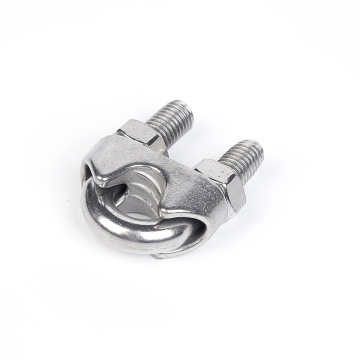


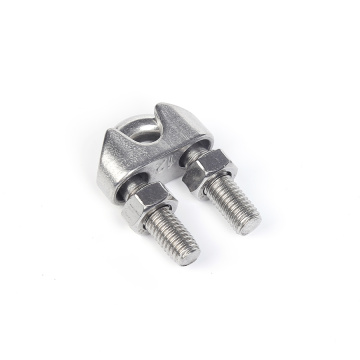
Wire rope clips, also known as wire rope clamps or U-bolt clips, are essential mechanical fasteners used to create permanent or temporary loops at the ends of wire ropes. These industrial hardware components consist of a U-shaped bolt, a base saddle, and two nuts that work together to securely clamp the wire rope strands, ensuring structural integrity under tension.
In industrial procurement, wire rope clips serve as critical connection points for rigging, lifting, mooring, and structural support applications. The proper selection and installation of these clips directly impacts workplace safety, equipment longevity, and operational efficiency. Understanding the fundamental mechanics of wire rope clip functionality helps procurement specialists make informed decisions that prevent costly failures and ensure compliance with industry standards.
Each wire rope clip assembly contains three primary components: the U-bolt that wraps around the dead end of the wire rope, the saddle base that contacts the live end, and the locking nuts that apply uniform pressure. This design creates friction-based grip that prevents slippage while maintaining the wire rope's structural strength.
The material composition typically involves stainless steel grades such as 304, 316, or 316L, providing corrosion resistance for harsh environments including marine applications, chemical processing facilities, and outdoor construction projects. Chenglu Stainless Steel Products manufactures these components using advanced production equipment to meet international quality standards.

As a specialized manufacturer of stainless steel products, Chenglu Stainless Steel Products Co., Ltd delivers wire rope clips engineered for maximum reliability and performance. Our commitment to integrity-based innovation ensures that every clip meets rigorous quality standards demanded by global industrial buyers.
Manufactured from high-grade 304, 316, and 316L stainless steel, our wire rope clips offer exceptional corrosion resistance and tensile strength. This material selection extends service life in aggressive environments while reducing replacement frequency and total cost of ownership.
Our facility utilizes state-of-the-art production equipment and testing instruments to maintain consistent dimensional accuracy and surface finish. Every batch undergoes rigorous quality inspection to ensure uniform performance across all wire rope clip assemblies.
Products comply with international standards including DIN, WSC, ASME, and ISO specifications. This certification compatibility simplifies your procurement approval process and ensures seamless integration into existing supply chain requirements across multiple industries.
From food processing plants requiring hygienic stainless steel surfaces to pharmaceutical facilities demanding contamination-free hardware, our wire rope clips serve diverse industrial sectors. Chemical processing, brewing operations, and construction projects all benefit from our versatile product range.
Our experienced technical team provides comprehensive support for wire rope clip selection, installation procedures, and load capacity calculations. This expertise reduces procurement risk and ensures optimal performance for your specific application requirements.
Located in Xinghua City, Jiangsu Province with convenient transportation logistics, we maintain robust production capabilities to fulfill orders of any scale. Consistent supply chain reliability supports your project timelines and inventory management strategies.
Quality assurance represents the foundation of our manufacturing philosophy. At Chenglu Stainless Steel Products Co., Ltd, every wire rope clip undergoes systematic quality control processes designed to eliminate defects and ensure consistent performance across all production batches.
Raw material incoming inspection includes chemical composition analysis and mechanical property testing for each stainless steel batch. We verify that all materials meet specified grade requirements before entering the production workflow, preventing material substitution issues that could compromise final product performance.
Production monitoring utilizes precision measuring instruments to verify U-bolt dimensions, saddle base geometry, and thread specifications against engineering drawings. Statistical process control methods track dimensional variations in real-time, enabling immediate corrective actions when parameters approach tolerance limits.

Final product verification includes tensile strength testing, corrosion resistance evaluation, and surface finish inspection. Each production lot receives sampling tests that validate load-bearing capacity and durability characteristics, ensuring delivered wire rope clips meet or exceed customer specifications.
Our corporate spirit of "integrity-based, innovation-based" drives continuous investment in R&D activities and process optimization. We regularly update production techniques, introduce advanced testing methodologies, and train technical personnel to maintain competitive advantage in the global wire rope clip market.
Selecting the appropriate wire rope clip requires careful consideration of multiple technical factors that directly impact safety performance and operational costs. Procurement specialists must evaluate material compatibility, size matching, load requirements, and regulatory compliance to ensure optimal selection for their specific application.
Match environment to material: Standard indoor applications may utilize 304 stainless steel, while marine, chemical, or coastal installations require 316 or 316L grades for superior chloride resistance. Incorrect material selection accelerates corrosion and reduces clip lifespan significantly.
Verify exact wire rope diameter: Wire rope clips must match the nominal diameter of the rope within tight tolerances. Undersized clips cannot generate adequate clamping force, while oversized clips fail to secure the rope properly. Always consult manufacturer sizing charts before ordering.
Calculate working load limits: Determine maximum expected loads including dynamic forces, safety factors, and potential shock loading conditions. Select wire rope clips with rated capacities exceeding your calculated requirements by appropriate safety margins defined by industry standards.
Follow proper arrangement rules: Minimum clip quantity depends on wire rope diameter and intended application. Standard practice places saddles on the live end and U-bolts on the dead end. Proper spacing between clips ensures uniform load distribution across the termination point.
Identify applicable standards: Different industries require compliance with specific codes such as OSHA regulations for lifting applications, EN standards for European markets, or ASME requirements for pressure systems. Verify that supplier documentation confirms compliance with relevant standards.
Consider environmental exposure: Standard mill finish suits most applications, but polished or passivated surfaces provide enhanced corrosion resistance and easier cleaning for food processing or pharmaceutical environments. Surface treatment selection affects both performance and lifecycle costs.
Use this comprehensive checklist to evaluate potential wire rope clip suppliers and ensure you select a partner capable of meeting your quality, delivery, and technical requirements. Systematic evaluation reduces procurement risk and establishes long-term supply chain reliability.
Verified manufacturing capability with documented production equipment and testing instruments
International certifications and compliance with relevant industry standards (DIN, WSC, ASME, ISO)
Proven track record serving target industries (food processing, pharmaceuticals, construction, marine)
Transparent quality control procedures with documented inspection and testing protocols
Complete material certificates confirming stainless steel grade (304, 316, 316L) and chemical composition
Detailed dimension specifications matching wire rope diameter requirements within tolerance limits
Published load capacity data verified through independent testing or certified calculation methods
Available surface finish options suitable for your specific environmental and hygiene requirements
Competitive pricing structure with transparent cost breakdown and volume discount availability
Realistic lead times aligned with your project schedules and inventory replenishment cycles
Flexible minimum order quantities accommodating both trial orders and large-scale procurement needs
Clear warranty terms and responsive after-sales support for quality issue resolution
Secure packaging methods protecting products from damage during transit and storage
Experienced technical team available for consultation on selection, installation, and troubleshooting
Established logistics partnerships ensuring reliable shipping to your geographic location
Responsive communication channels for order tracking, documentation requests, and issue resolution
Procurement professionals frequently encounter challenges when sourcing wire rope clips that can result in increased costs, project delays, or safety incidents. Recognizing these common problems enables proactive mitigation strategies and more effective supplier evaluation processes.
The Problem: Specifying standard carbon steel clips for corrosive environments leads to premature failure, rust contamination, and unexpected replacement costs. Many buyers underestimate environmental degradation rates and select insufficient material grades.
Solution: Conduct thorough environmental assessment including humidity levels, chemical exposure, temperature ranges, and proximity to salt water. Specify appropriate stainless steel grades (304 for general use, 316/316L for marine or chemical applications) based on actual operating conditions rather than generic requirements.
The Problem: Ordering clips based on approximate wire rope measurements results in poor fit, inadequate clamping force, and reduced load capacity. Even minor diameter mismatches can significantly compromise termination integrity and create dangerous failure modes.
Solution: Measure actual wire rope outer diameter using calibrated calipers before placing orders. Cross-reference measurements with manufacturer sizing charts allowing for manufacturing tolerances. Order sample quantities for fit verification before committing to full production orders.
The Problem: Accepting supplier claims without requesting supporting documentation exposes buyers to substandard products. Missing material certificates, absent test reports, and unclear quality procedures increase procurement risk significantly.
Solution: Require comprehensive documentation including mill test certificates, third-party inspection reports, and detailed quality control procedures. Conduct supplier audits when possible or request video tours of manufacturing facilities to verify claimed capabilities.
The Problem: Purchasing correct clips but failing to provide proper installation instructions to end users results in incorrect orientation, insufficient tightening torque, and improper clip spacing. Installation errors account for significant percentage of wire rope termination failures.
Solution: Include installation guidelines with purchase orders specifying saddle placement on live end, U-bolt orientation on dead end, proper spacing intervals, and recommended tightening procedures. Provide visual diagrams and torque specifications to field installation teams.
Wire rope clips serve critical functions across numerous industrial sectors where reliable wire rope terminations are essential for safe and efficient operations. Understanding application-specific requirements helps procurement specialists identify optimal product specifications and supplier capabilities for their industry context.
Building construction, bridge maintenance, and structural engineering projects require heavy-duty wire rope clips for cable stays, suspension systems, and temporary shoring applications. These installations demand high load capacities and strict compliance with building codes and safety regulations.
Shipbuilding, port operations, and offshore platforms utilize marine-grade wire rope clips for mooring lines, anchor systems, cargo securing, and rigging applications. Saltwater exposure necessitates 316 or 316L stainless steel construction with enhanced corrosion protection measures.
Underground and surface mining operations depend on wire rope clips for hoisting systems, conveyor cables, safety barriers, and equipment tethering. Harsh abrasive environments and heavy dynamic loads require robust clip designs with verified fatigue resistance characteristics.
Sanitary wire rope clip applications in food handling, beverage production, and pharmaceutical manufacturing require smooth surface finishes that resist bacterial colonization and withstand frequent cleaning with aggressive sanitizing chemicals. Passivated 316 stainless steel meets FDA and EU food contact requirements.
Process plants, refineries, and chemical storage facilities employ wire rope clips for instrument tubing, safety railings, pipe support systems, and emergency shutdown mechanisms. Chemical resistance to acids, alkalis, and solvents dictates specific alloy selections and surface treatments.
Cargo securing on ships, trains, and trucks utilizes wire rope clips for lashing systems, tarpaulin support structures, and load restraint applications. Vibration resistance and easy installation features are critical for efficient turnaround times in logistics operations.
When evaluating potential suppliers for wire rope clips, consider manufacturers who demonstrate comprehensive capabilities spanning research and development, precision manufacturing, quality assurance, and responsive customer service. The following criteria help identify partners capable of supporting your long-term procurement objectives.
Strengths: Specialized stainless steel manufacturer with advanced production equipment, experienced technical team, and commitment to international quality standards. Strong presence in food processing, pharmaceutical, chemical, and construction sectors.
Key Advantages: Direct manufacturing capability ensures quality control throughout production process. Continuous R&D investment drives product innovation and process improvement. Customer-centric service philosophy supports complex procurement requirements.
Manufacturing Scale: Assess production capacity, equipment modernization level, and facility organization to determine ability to fulfill your order volumes consistently and reliably.
Quality Systems: Examine quality management procedures, testing capabilities, and certification status to verify supplier commitment to consistent product quality and regulatory compliance.
Addressing common procurement questions about wire rope clips helps streamline purchasing decisions and reduces uncertainty during supplier evaluation processes. These responses cover technical specifications, installation requirements, and commercial considerations relevant to professional buyers.
Minimum order quantities vary based on product specifications, material grades, and current production schedules. Chenglu Stainless Steel Products accommodates both trial orders and large-scale procurement needs with flexible MOQ policies designed to support buyer requirements at all stages of the procurement relationship.
Measure the actual outer diameter of your wire rope using precision calipers and cross-reference with manufacturer sizing charts. Select clips specifically designated for your rope diameter, accounting for manufacturing tolerances. When uncertain, request technical consultation from your supplier to verify optimal selection.
304 stainless steel offers good general corrosion resistance suitable for indoor and mild outdoor environments. 316 stainless steel contains molybdenum addition providing superior resistance to chlorides, making it essential for marine applications, coastal installations, and chemical processing environments where 304 would experience accelerated corrosion.
Minimum clip quantity depends on wire rope diameter and application type. General guidelines specify at least three clips for diameters up to 5/16 inch, four clips for 3/8 to 1/2 inch, and five or more clips for larger diameters. Always consult relevant industry standards and engineering specifications for your specific application requirements.
While wire rope clips can technically be removed and reinstalled, reuse is generally not recommended for safety-critical applications. Reinstallation may compromise clamping force due to thread wear, nut deformation, or surface damage. For new installations or rope adjustments, always use fresh clips to ensure optimal performance and safety.
Reputable suppliers provide material certificates confirming stainless steel grade and chemical composition, test reports documenting mechanical properties, compliance declarations referencing applicable standards, and installation guidelines with torque specifications. Request these documents explicitly when placing orders to ensure complete traceability.
Standard inventory items typically ship within 3-7 business days. Custom specifications or large volume orders require 2-4 weeks depending on material availability, production scheduling, and quality verification requirements. Discuss your timeline requirements with your supplier early in the procurement process to ensure alignment.
Many wire rope clips meet requirements of DIN, WSC, ASME, and ISO standards governing wire rope terminations. However, specific lifting applications may require additional certifications or engineering approvals. Verify compliance requirements with your local regulatory authority and confirm supplier documentation matches applicable standards before procurement.
Privacy statement: Your privacy is very important to Us. Our company promises not to disclose your personal information to any external company with out your explicit permission.
Fill in more information so that we can get in touch with you faster
Privacy statement: Your privacy is very important to Us. Our company promises not to disclose your personal information to any external company with out your explicit permission.