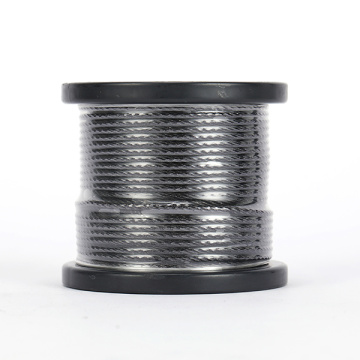
Stainless Flux Core Welding Wire

What Is Stainless Flux Core Welding Wire?

Stainless flux core welding wire is a tubular electrode filled with specialized chemical compounds designed to stabilize the arc and protect the weld pool from atmospheric contamination. Unlike solid wire, which requires external shielding gas, this self-shielding or gas-shielded consumable generates its own protective slag and gas envelope during the welding process.

This advanced consumable is engineered for high-deposition efficiency and deep penetration, making it ideal for heavy-duty fabrication. The flux composition allows for excellent alloy transfer and mechanical properties, ensuring robust joints in stainless steel structures used across food processing, pharmaceuticals, and construction industries.

Quality Standards in Stainless Flux Core Manufacturing

Advanced Production Technology

Our manufacturing facility utilizes state-of-the-art equipment to ensure consistent tube drawing and precise powder filling. This precision engineering guarantees uniform flux distribution, which is critical for stable arc performance and consistent weld bead appearance.

Rigorous Testing Protocols

Every batch of stainless flux core welding wire undergoes strict quality control checks, including tensile strength testing, impact resistance analysis, and corrosion resistance verification. We adhere to international standards to ensure our products meet the demanding requirements of global industrial buyers.

Material Integrity

We source only premium-grade stainless steel strip and high-purity alloy powders. Our commitment to "integrity-based" sourcing ensures that the final welding consumable delivers reliable performance in corrosive environments and high-stress applications.

How to Choose the Right Stainless Flux Core Welding Wire

Match the Grade

Select a wire grade that matches your base metal composition (e.g., 304, 316, 321). Mismatched alloys can lead to corrosion vulnerabilities or reduced mechanical strength in the final weld. Always verify the chemical composition certification provided by the supplier.

Shielding Gas Requirements

Determine if your application requires gas-shielded (e.g., Ar+CO2) or self-shielded wire. Gas-shielded options typically offer smoother arcs and lower spatter, while self-shielded wires are better suited for outdoor windy conditions where external gas protection is impractical.

Diameter and Position

Choose the wire diameter based on material thickness and desired deposition rate. Thinner wires allow for precise positional welding (all-position), while thicker wires maximize productivity on heavy structural steel. Consult technical data sheets for recommended amperage ranges.

Buyer Decision Checklist for Welding Consumables

Certification Verification

Ensure the supplier provides Mill Test Certificates (MTC) confirming chemical and mechanical properties compliance with ISO or AWS standards.

Packaging Integrity

Verify that the wire is vacuum-packed or moisture-sealed to prevent flux degradation. Humidity exposure can compromise weld quality and cause porosity.

Production Capacity

Assess the manufacturer's ability to handle large volume orders without compromising lead times. A robust supply chain ensures continuity for your projects.

Technical Support

Prioritize suppliers who offer welding parameter guidance and troubleshooting support. Expert assistance can optimize your welding process and reduce rework costs.

Common Problems with Stainless Flux Core Welding Wire

Porosity Issues

Problem: Bubbles or voids in the weld bead.
Solution: Check wind conditions if using self-shielded wire, verify gas flow rates for gas-shielded types, and ensure the base metal is clean and dry.

Unstable Arc

Problem: Fluctuating arc length leading to inconsistent penetration.
Solution: Adjust voltage-to-amperage ratio, check contact tip wear, and verify that the wire feed speed matches the machine settings.

Excessive Spatter

Problem: Metal droplets sticking to the workpiece around the weld.
Solution: Optimize shielding gas composition (increase Argon content), reduce voltage slightly, or switch to a wire grade specifically formulated for low spatter.

Corrosion Resistance Loss

Problem: Rust forming near the weld zone.
Solution: Ensure proper inter-pass cleaning to remove slag, use the correct filler metal grade, and avoid carbon contamination from tools used on other metals.

Why Source Stainless Flux Core Wire from Chenglu?

Integrated Manufacturing

As a direct manufacturer in Xinghua City, Jiangsu Province, we control every step from raw material selection to final packaging. This vertical integration allows us to offer competitive pricing without sacrificing quality.

Industry-Specific Expertise

Our products are widely used in food processing, pharmaceuticals, and chemical industries. We understand the stringent hygiene and corrosion requirements of these sectors and tailor our welding consumables accordingly.

Global Reliability

With a commitment to innovation and integrity, we have built a reputation for consistent delivery and reliable performance. Our experienced technical team supports international clients with tailored solutions for complex welding challenges.

Frequently Asked Questions About Stainless Flux Core Wire

What is the shelf life of stainless flux core welding wire?

When stored in original sealed packaging in a dry environment, the shelf life is typically 12-24 months. Once opened, it is recommended to use the wire within a few days or store it in a controlled humidity cabinet to prevent flux moisture absorption.

Can I use self-shielded flux core wire outdoors?

Yes, self-shielded flux core wires are specifically designed for outdoor use as they do not rely on external shielding gas bottles. However, extremely high winds may still affect the protective gas envelope generated by the flux, so windbreaks are advisable for optimal results.

How does stainless flux core wire differ from MIG solid wire?

Flux core wire contains a powdered core that creates its own shielding gas and slag, allowing for deeper penetration and higher deposition rates. Solid MIG wire requires external gas and generally produces a cleaner weld with less spatter but slower travel speeds. Flux core is often preferred for thicker materials and field fabrication.

What certifications do your welding wires hold?

Our products are manufactured under strict quality management systems and comply with relevant international standards. We provide Mill Test Certificates (MTC) detailing chemical composition and mechanical properties for every batch, ensuring traceability and compliance with project specifications.

Do you offer custom packaging for bulk orders?

Yes, we understand that different markets and logistics chains require specific packaging solutions. We can accommodate custom labeling, vacuum sealing requirements, and pallet configurations to streamline your import and storage processes.

  • Send Inquiry

Copyright © 2026 Chenglu Stainless Steel Products Co., Ltd All rights reserved. Privacy Policy

We will contact you immediately

Fill in more information so that we can get in touch with you faster

Privacy statement: Your privacy is very important to Us. Our company promises not to disclose your personal information to any external company with out your explicit permission.

Send