


Please Leave Us A Message
Privacy statement: Your privacy is very important to Us. Our company promises not to disclose your personal information to any external company with out your explicit permission.


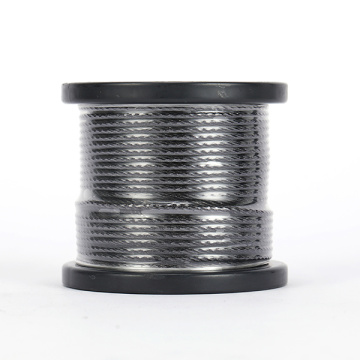


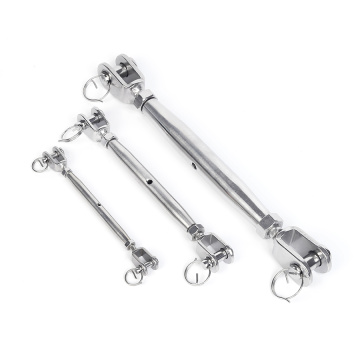


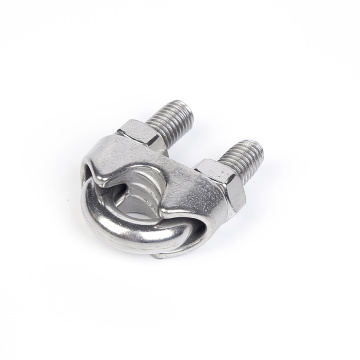

Coated stainless steel cable is a high-performance structural component engineered for maximum durability and corrosion resistance. It consists of a core stainless steel wire rope or strand that is extruded with a protective polymer coating, typically PVC, PE, or PU. This dual-layer construction ensures the cable maintains its tensile strength while gaining superior protection against harsh environmental factors.
For procurement managers, this product offers a critical advantage: it significantly extends the service life of installations in aggressive environments, such as marine settings, chemical processing plants, and heavy infrastructure projects. By reducing the frequency of replacements and maintenance downtime, coated stainless steel cables provide a lower total cost of ownership compared to uncoated alternatives.
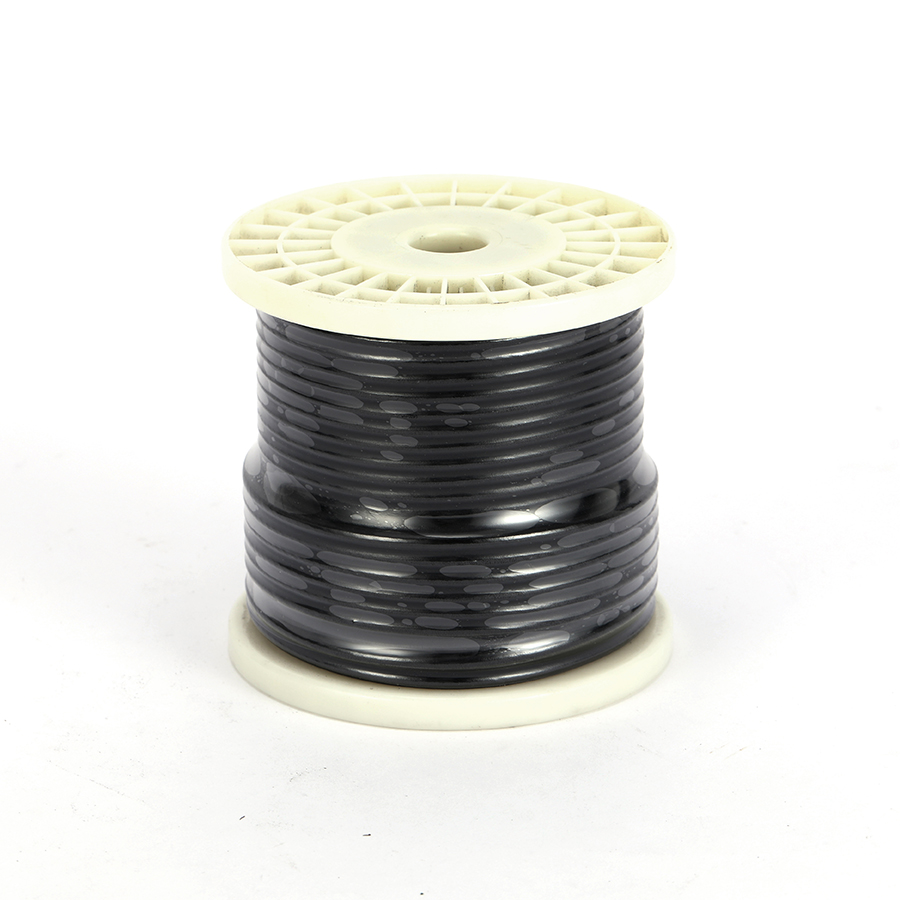
Our coated stainless steel cable features a tight bond between the steel core and the polymer sheath, creating an impermeable barrier against moisture, salt spray, and chemicals. This ensures long-term reliability in demanding industrial applications without compromising structural integrity.
Utilizing state-of-the-art extrusion equipment, we achieve precise coating thickness control and uniform surface finish. This technological edge allows us to meet strict international standards for diameter tolerance and mechanical performance, ensuring consistent quality across large-scale orders.
We understand that every project has unique requirements. Our flexible manufacturing process allows for customization of cable diameters, core types (single or multi-strand), and coating colors/materials. This adaptability helps you streamline your supply chain by sourcing specialized components from a single reliable supplier.

At Chenglu Stainless Steel Products Co., Ltd., quality is not just a checkpoint—it is embedded in our production workflow. From raw material sourcing to final inspection, every coated stainless steel cable undergoes rigorous testing to ensure it meets global industry standards.
Our commitment to excellence ensures that you receive coated stainless steel cables that perform reliably under stress, providing peace of mind for your most critical projects.
Selecting the optimal coated stainless steel cable requires careful consideration of several technical factors. Making the wrong choice can lead to premature failure, safety hazards, and increased lifecycle costs. Use this guide to evaluate suppliers and specifications effectively.
The base wire determines the cable's fundamental strength and corrosion resistance. Common grades include 304, 316, and 316L stainless steel. For marine or highly corrosive environments, 316/316L is recommended due to its molybdenum content, which enhances pitting resistance.
The outer coating protects the core and provides additional environmental shielding. PVC is cost-effective and versatile, PE offers excellent UV resistance, and PU provides superior abrasion resistance. Ensure the coating thickness meets your application's mechanical and chemical demands.
Cables come in various constructions, such as 1x19, 7x7, or 7x19 strands. Single strand (1x19) offers high strength and straightness, ideal for rigging. Multi-strand (7x7, 7x19) provides greater flexibility and fatigue resistance, suitable for dynamic applications like moving pulleys.
Before finalizing your procurement order for coated stainless steel cable, use this checklist to mitigate risk and ensure vendor alignment.
Problem: The polymer coating separates from the steel core, exposing it to corrosion.
Cause: Poor surface preparation before extrusion, incorrect temperature settings during coating, or using incompatible materials.
Solution: Request detailed manufacturing parameters from your supplier. Inspect samples for uniform adhesion. Choose suppliers with proven extrusion technology and quality assurance protocols.
Problem: The cable breaks under loads significantly lower than advertised specifications.
Cause: Variations in wire drawing processes, improper heat treatment, or substandard raw materials.
Solution: Verify the supplier's material certificates and conduct independent tensile testing on incoming shipments. Establish clear contractual specifications for minimum breaking load.
Problem: The coating discolors or becomes brittle after exposure to sunlight or chemicals.
Cause: Use of low-quality polymers lacking UV stabilizers or chemical resistance additives.
Solution: Specify high-grade coatings (e.g., UV-resistant PE or specialized PU) for outdoor or harsh chemical environments. Request accelerated aging test reports from the manufacturer.
The versatility of coated stainless steel cable makes it indispensable across multiple sectors. Its combination of strength, flexibility, and environmental resistance enables innovative solutions in complex engineering challenges.
Used for rigging, balustrades, and mooring lines where saltwater corrosion is a constant threat. The coating provides an extra layer of defense against harsh marine atmospheres.
Ideal for cable net structures, glass railings, and tensioned facades. The aesthetic appeal of colored coatings allows for design integration, while the steel core ensures structural safety.
Employed in lifting systems, conveyors, and automation equipment. The flexibility of multi-strand cables accommodates dynamic movements, while the coating protects against wear and tear.
Used for fencing and animal containment. The smooth coating prevents injury to animals and resists corrosion from manure and cleaning agents, ensuring long-lasting durability.
Applied in railway signaling, overhead catenary systems, and vehicle security. The high strength-to-weight ratio and resistance to vibration make it suitable for transport infrastructure.
Used in wind turbine blade pitch systems and solar panel tracking structures. The reliability of coated stainless steel cable ensures consistent performance in remote or hard-to-access locations.
PVC (Polyvinyl Chloride) is generally more cost-effective and offers good chemical resistance, making it suitable for many indoor and mild outdoor applications. PE (Polyethylene) provides superior UV resistance and flexibility, making it a better choice for prolonged outdoor exposure. The selection depends on your specific environmental conditions and budget constraints.
No, the coating must be removed from the welding area before any welding operation. Welding through the coating can cause toxic fumes, poor weld quality, and damage to the surrounding coating. Proper preparation involves stripping the coating back to bare metal and cleaning the surface thoroughly.
Lead times vary based on order volume, specification complexity, and current production schedules. Standard sizes may be available from stock for faster delivery. Custom orders typically require 15-30 days for production. We recommend discussing your timeline early in the procurement process to ensure timely delivery.
The polymer coating itself adds minimal tensile strength. The breaking strength is primarily determined by the stainless steel core. However, a high-quality coating protects the core from corrosion, which preserves the cable's strength over time. A poorly applied coating could potentially cause stress concentrations, so proper manufacturing techniques are crucial.
Privacy statement: Your privacy is very important to Us. Our company promises not to disclose your personal information to any external company with out your explicit permission.
Fill in more information so that we can get in touch with you faster
Privacy statement: Your privacy is very important to Us. Our company promises not to disclose your personal information to any external company with out your explicit permission.