


Please Leave Us A Message
Privacy statement: Your privacy is very important to Us. Our company promises not to disclose your personal information to any external company with out your explicit permission.


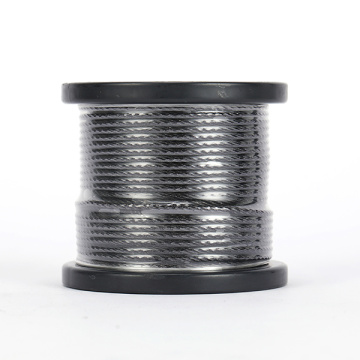





Stainless flux core wire is a tubular metal electrode filled with specialized chemical compounds that act as a shielding gas and slag former during the welding process.
Unlike solid MIG wires, this consumable provides an internal shield that protects the molten weld pool from atmospheric contamination. This makes it particularly effective for outdoor welding or in environments where wind might disrupt external gas shields. The flux composition determines the arc stability, penetration profile, and mechanical properties of the final weld bead.
For B2B procurement managers, choosing the right stainless flux core wire ensures robust joint integrity in heavy-duty fabrication, significantly reducing rework rates and material waste compared to basic solid wire alternatives.
Manufacturing processes adhere to international quality management systems, ensuring consistent batch-to-batch performance.
Raw materials are sourced for high purity levels, minimizing inclusions and ensuring superior corrosion resistance in the final product.
Continuous investment in research and development allows us to optimize flux formulations for specific alloy grades and welding positions.
Our facility utilizes advanced drawing and rolling equipment to produce wire with precise dimensional tolerances. This precision is critical for automated feeding systems, preventing jams and ensuring stable welding arcs. Every spool undergoes rigorous testing to meet industry specifications for tensile strength and ductility.
Selecting the correct grade is fundamental. Common grades include 308L, 316L, and 410NiMo. Ensure the wire's chemical composition matches the base metal to prevent cracking and ensure corrosion resistance. Mismatched alloys can lead to catastrophic joint failure under stress or corrosive conditions.
Wire diameter (e.g., 0.8mm, 1.0mm, 1.2mm) dictates heat input and deposition rate. Thinner wires are ideal for sheet metal and precision work, while thicker wires offer deeper penetration for heavy structural steel. Match the diameter to your equipment's capacity and the thickness of the material being welded.
Most stainless flux core wires require an external shielding gas, typically CO2 or Ar/CO2 mixes. Verify the recommended gas mixture for your specific application to optimize arc stability and minimize spatter. Using the wrong gas can degrade weld quality and increase consumption costs.
Not all flux core wires are suitable for all positions (Flat, Horizontal, Overhead). Some formulations are designed specifically for vertical-up welding. Check the technical data sheet (TDS) to ensure the wire supports the positional requirements of your fabrication workflow.
Does the wire meet relevant standards (AWS, ISO)?
Is the tolerance for diameter within +/- 0.05mm?
Are mechanical property test reports available?
Can the supplier handle bulk orders without delay?
Is packaging moisture-proof to prevent flux degradation?
Are samples available for trial before full commitment?
Low-quality flux formulations often result in excessive spatter, increasing post-weld cleaning time and labor costs. High-quality wires minimize spatter for a cleaner, more professional finish.
Poorly designed slag can be difficult to chip off, especially in multi-pass welds. Look for wires that produce a loose, easily removable slag layer to speed up production cycles.
Variations in wire roundness or flux packing density can cause erratic arcs. This leads to inconsistent penetration and potential defects. Strict manufacturing tolerances are essential for reliability.
Ideal for welding structural steel beams, bridges, and heavy machinery where deep penetration and high strength are required. The flux core wire handles rust and scale better than solid wires, making it perfect for field construction.
Used extensively in ship hull construction and offshore platforms. The corrosion-resistant stainless variants provide durability against harsh marine environments, ensuring long-term structural integrity.
Critical for fabricating tanks, boilers, and pipelines that must withstand high pressure and temperature. Precise alloy matching ensures the weld zone maintains the same safety ratings as the parent metal.
High-purity 304L and 316L wires are used for sanitary equipment and processing tanks. They ensure hygienic surfaces free from contamination, meeting strict industry hygiene standards.
Located in Xinghua City, Jiangsu Province, Chenglu specializes in high-quality stainless steel products including wire rope, chains, and welding wire. Their focus on R&D and advanced testing instruments ensures that every batch meets international standards.
Why Partner With Us: We combine integrity-based service with innovation-driven technology. Our experienced technical team provides custom solutions for complex welding challenges, helping you reduce downtime and improve overall fabrication efficiency.
We serve clients worldwide, offering reliable logistics and consistent supply chain management. Whether you need small batches for prototyping or large volumes for mass production, we scale to meet your needs.
Our service concept places you at the center. From technical consultation to after-sales support, we ensure a smooth procurement experience, allowing you to focus on your core business operations.
Solid MIG wire requires an external shielding gas bottle, which can be disrupted by wind. Flux core wire generates its own shielding gas from the flux inside the tube, making it more versatile for outdoor use and generally faster for thick materials.
Generally, no. Stainless flux core wire is formulated to match the chemistry of stainless steel. Using it on mild steel will result in incorrect alloy composition in the weld, leading to poor corrosion resistance and potential mechanical failures.
Store in a dry, cool place away from direct sunlight. Keep the original sealed packaging until ready to use. Once opened, use the wire promptly or seal it in a moisture-proof bag to prevent the flux from absorbing humidity, which can cause porosity in the weld.
Most manufacturers recommend CO2 or a mixture of Argon and CO2 (e.g., 98% Ar / 2% CO2). Always check the specific technical data sheet for the wire grade you are using, as the optimal mix affects arc stability and spatter levels.
Privacy statement: Your privacy is very important to Us. Our company promises not to disclose your personal information to any external company with out your explicit permission.
Fill in more information so that we can get in touch with you faster
Privacy statement: Your privacy is very important to Us. Our company promises not to disclose your personal information to any external company with out your explicit permission.