


Please Leave Us A Message
Privacy statement: Your privacy is very important to Us. Our company promises not to disclose your personal information to any external company with out your explicit permission.


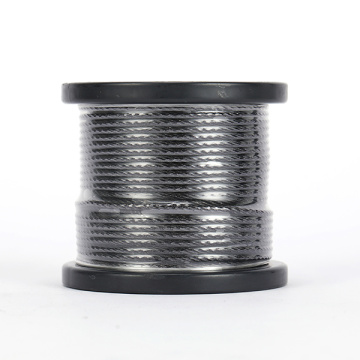




Stainless steel annealed wire is a specialized metal product that has undergone a controlled heat treatment process to relieve internal stresses and enhance ductility. Unlike cold-drawn stainless steel wire, which can be hard and brittle, annealing softens the material, making it significantly more pliable and easier to work with.
For procurement managers, this distinction is critical. The annealing process transforms the wire from a high-strength structural component into a versatile forming material. It allows for complex bending, twisting, and weaving operations without the risk of fracture, which is essential for applications requiring intricate shapes or flexible connections.
Key Benefit: The enhanced formability of annealed wire reduces manufacturing downtime and scrap rates during the fabrication of complex parts, ultimately lowering your total production costs.


At Chenglu Stainless Steel Products Co., Ltd., our manufacturing process is built on rigorous quality assurance protocols. We utilize advanced continuous annealing furnaces that ensure uniform heating and cooling across every meter of wire produced. This consistency is vital for maintaining predictable mechanical properties in your final products.
Our automated control systems monitor temperature and speed with precision, ensuring that every batch of stainless steel annealed wire meets strict standards for softness and tensile strength variability.
We implement stringent cleaning procedures before annealing to prevent oxidation and surface defects. This results in a clean, scale-free finish that requires minimal post-processing, saving you time and labor costs.
Selecting the correct specification for your application involves balancing material grade, diameter tolerance, and temper. Understanding these variables helps you avoid over-engineering (paying for unnecessary strength) or under-specifying (risking part failure).
Common grades include 304, 316, and 430. 304 offers general corrosion resistance, while 316 is essential for marine or chemical environments. 430 provides magnetic properties and good resistance to atmospheric corrosion.
Precision matters. Standard tolerances may suffice for binding applications, but electronic or medical components often require tight tolerances (e.g., +/- 0.01mm) to ensure proper fit and function.
Annealed wire is typically supplied in a "soft" temper. However, some applications require a slightly harder temper (light draw) to provide minimal spring-back while retaining formability. Confirm your required hardness level with your supplier.
Before finalizing your purchase order, use this checklist to mitigate risk and ensure alignment with your engineering specifications.
Procuring specialty metals can present unexpected challenges. Here are common issues buyers face and how to resolve them effectively.
Issue: Some sections of the coil are too hard, causing breaks during bending or weaving processes.
Solution: Specify a required hardness range (e.g., HV or HB) in your contract and request pre-shipment sampling. Ensure your supplier uses a continuous annealing line rather than batch annealing for better consistency.
Issue: Visible blue or black scales on the wire surface after annealing, indicating improper atmosphere control in the furnace.
Solution: Require suppliers to use protective atmospheres (like hydrogen or vacuum) during annealing. For critical applications, specify pickled and passivated finishes to remove any minor surface imperfections.
Issue: Coils loosen during shipping or storage, leading to tangling and difficult unwinding at the factory.
Solution: Mandate tight winding tension and secure strapping. Use edge protectors on pallets to prevent deformation of the outer wraps.
Issue: Receiving a lower-grade alloy (e.g., 200 series) instead of the specified 304 or 316 grade.
Solution: Always verify the Mill Test Certificate (MTC) against the ordered specifications. Consider using third-party inspection services for large volume orders to confirm chemical composition via PMI (Positive Material Identification) testing.
The versatility of annealed stainless steel wire makes it indispensable across multiple sectors. Its combination of corrosion resistance and formability opens up diverse industrial possibilities.
Used in wire mesh filters, conveyor belts, and strainers. The annealed state allows for easy weaving into precise mesh patterns, while the stainless steel composition ensures hygiene and resistance to cleaning chemicals.
Ideal for cable railing systems, mesh fencing, and decorative screens. The soft temper allows installers to bend and shape the wire on-site to fit custom architectural designs without specialized tools.
Employed in braided grounding wires, shielding cables, and component leads. The flexibility of annealed wire facilitates complex braiding patterns that provide effective electromagnetic interference (EMI) shielding.
Used in surgical sutures, orthodontic archwires, and sterilization basket meshes. High-purity grades like 316L are preferred here, where biocompatibility and precise mechanical behavior are paramount.
Found in brake lines, fuel hoses, and aircraft cable controls. The ability to withstand vibration and harsh environmental conditions makes it a reliable choice for critical safety components.
Used in shopping carts, laundry baskets, and furniture frames. The aesthetic appeal of bright, clean stainless steel combined with durability makes it a popular choice for durable consumer products.
Partnering with the right supplier ensures consistent quality, reliable delivery, and competitive pricing. Chenglu Stainless Steel Products Co., Ltd. stands out as a trusted partner for global buyers.
Our facility in Xinghua City, Jiangsu Province, is equipped with state-of-the-art production lines and testing instruments. This investment allows us to maintain tight control over the annealing process, ensuring every coil meets international standards for ductility and surface quality.
We adhere to a service concept centered on our customers' needs. Our experienced technical team provides proactive support, helping you select the optimal wire specification for your application and resolving any quality concerns promptly.
Our commitment to integrity and innovation has earned us the trust of customers worldwide. We prioritize transparency in our transactions and provide comprehensive documentation, including Mill Test Certificates and origin certificates, to simplify your import and compliance processes.
Whether you require small batches for prototyping or large volumes for mass production, our flexible manufacturing setup can accommodate your order size. This scalability helps you manage inventory levels efficiently and respond quickly to market demands.
Annealed wire has been heated and cooled slowly to relieve internal stresses, resulting in a soft, highly ductile material that is easy to bend and form. Cold-drawn wire is processed at room temperature through a die, making it harder, stronger, and less flexible. Choose annealed wire for weaving, binding, and complex shaping; choose cold-drawn wire for springs, fasteners, and high-strength structural applications.
Yes, annealed wire can be work-hardened through cold working processes such as bending, twisting, or drawing. However, this increases strength while reducing ductility. If you need a specific balance of strength and flexibility, discuss intermediate tempers with your supplier rather than relying solely on post-purchase hardening.
We offer standard seaworthy packaging, which includes inner waterproof plastic wrapping and outer wooden pallets or steel straps to prevent shifting and moisture damage. Custom packaging solutions are available upon request to meet specific customer logistics requirements or warehouse handling preferences.
Yes, stainless steel is 100% recyclable without loss of quality. At the end of its lifecycle, annealed wire can be collected and melted down to produce new stainless steel products. This supports sustainable manufacturing practices and can contribute to green building certifications or corporate sustainability goals.
Standard lead times typically range from 15 to 25 days depending on the order volume, wire specifications, and current production schedule. For urgent requirements, please contact our sales team early to check availability and explore expedited shipping options.
Privacy statement: Your privacy is very important to Us. Our company promises not to disclose your personal information to any external company with out your explicit permission.
Fill in more information so that we can get in touch with you faster
Privacy statement: Your privacy is very important to Us. Our company promises not to disclose your personal information to any external company with out your explicit permission.