


Please Leave Us A Message
Privacy statement: Your privacy is very important to Us. Our company promises not to disclose your personal information to any external company with out your explicit permission.


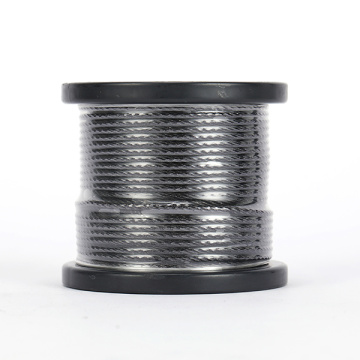


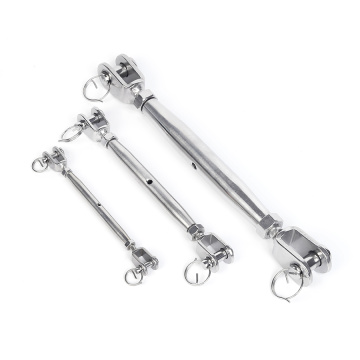


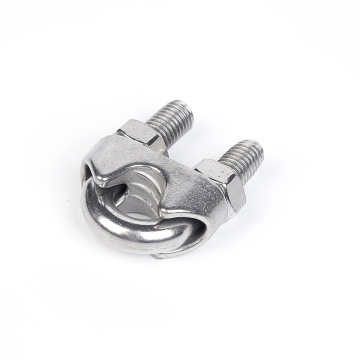
Stainless steel micro wire is a specialized category of high-performance metal filament defined by its extremely small diameter, typically ranging from 0.01mm to 0.5mm. Crafted from premium austenitic or martensitic stainless steel grades such as 304, 316L, and 321, this precision-engineered material offers an exceptional balance of tensile strength, corrosion resistance, and thermal stability.
Unlike standard industrial cables, micro wire is manufactured using advanced drawing techniques that ensure uniform dimensional tolerances and smooth surface finishes. This makes it the ideal raw material for industries where precision, durability, and reliability are non-negotiable—such as medical device manufacturing, aerospace electronics, and high-precision instrumentation.
Buyer Benefit: Sourcing certified stainless steel micro wire from established manufacturers like Chenglu reduces your risk of production downtime caused by material inconsistencies or premature corrosion failure.

Located in Xinghua City, Jiangsu Province—a hub for China's stainless steel industry—Chenglu utilizes state-of-the-art multi-draw bench machines and automated polishing equipment. These facilities allow us to produce micro wires with diameters as fine as 0.01mm while maintaining strict tolerance levels.
Every batch of stainless steel micro wire undergoes comprehensive testing, including tensile strength analysis, hardness testing, and surface defect inspection. We employ non-destructive testing methods to ensure that every spool meets international quality standards before shipment.
We maintain full traceability from raw steel coils to finished micro wire products. Our quality management system ensures that material certifications accompany every order, providing you with complete documentation for your own compliance and auditing requirements.
Surface quality is critical for micro wire applications. Our advanced polishing and annealing processes deliver consistent surface finishes—ranging from bright annealed to pickled states—ensuring optimal performance in sensitive applications like medical devices and electronics.

Selecting the right supplier for stainless steel micro wire requires careful evaluation of technical capabilities, quality systems, and supply chain reliability. Here are the key factors procurement professionals should prioritize:
Verify that your supplier operates modern drawing equipment capable of producing the specific diameters and tolerances your application requires. Suppliers with in-house R&D teams can offer custom solutions for specialized requirements.
Ensure your supplier maintains ISO 9001 certification and provides mill test certificates (MTC) for every batch. Inquire about their internal testing laboratory capabilities—they should be able to perform tensile, hardness, and chemical composition tests on-site.
Choose a supplier with proven experience in your specific industry sector. A manufacturer familiar with medical-grade or aerospace-grade requirements will understand the stricter tolerances and documentation needs of your application.
Assess the supplier's production capacity, lead times, and inventory management practices. A reliable supplier maintains adequate raw material stocks and has contingency plans to ensure consistent delivery even during peak demand periods.
Confirm the exact stainless steel grade (304, 316L, 321, 410, etc.) matches your corrosion and temperature requirements.
Verify diameter tolerances meet your application's precision specifications (typically ±0.005mm or tighter).
Specify the required temper condition (annealed, hard-drawn, spring temper) based on mechanical properties needed.
Request and review mill test certificates and material composition reports for sample batches.
Evaluate the supplier's production facility through virtual or on-site audits to verify equipment capability.
Confirm the supplier's ability to provide custom packaging and labeling per your company's requirements.
Negotiate pricing structures that account for volume discounts and long-term partnership benefits.
Establish clear lead time expectations and penalty clauses for delayed deliveries.
Define return policies and quality dispute resolution procedures before placing initial orders.
For medical applications, confirm biocompatibility certifications and cleanroom packaging capabilities.
For electrical applications, verify conductivity specifications and insulation compatibility if applicable.
For high-temperature applications, confirm the wire's oxidation resistance at operating temperatures.
Used in surgical instruments, implantable devices, and diagnostic equipment where biocompatibility and sterilization resistance are critical.
Ideal for precision springs, electrical contacts, welding electrodes, and shielding cables in consumer and industrial electronics.
Employed in aircraft control cables, instrumentation wiring, and high-strength fastening systems requiring exceptional reliability.
Used in food processing machinery, conveyor systems, and filtration equipment where hygiene and corrosion resistance are mandatory.
Applied in chemical processing equipment, pharmaceutical manufacturing tools, and laboratory instruments exposed to corrosive environments.
Utilized in cable stayed structures, architectural mesh, reinforcement applications, and decorative elements requiring aesthetic appeal.
Micro wire diameter variations beyond specified tolerances can cause assembly failures in precision applications. This often results from inconsistent drawing processes or worn dies. Work with suppliers who implement real-time diameter monitoring and frequent die replacement schedules.
Surface scratches, pits, or roughness can compromise the integrity of micro wire in sensitive applications. Poor handling during production or inadequate packaging can introduce damage. Request suppliers to use protective packaging and conduct 100% visual inspection before shipment.
Variations in tensile strength and hardness across different batches can disrupt manufacturing processes. This typically stems from inconsistent annealing parameters. Ensure your supplier maintains controlled furnace atmospheres and validates heat treatment cycles for each production run.
Unexpected corrosion in supposedly corrosion-resistant grades may indicate incorrect material composition or contamination during processing. Verify that your supplier performs chemical composition verification on incoming raw materials and maintains separate production lines for different grades.
Micro wire is susceptible to kinking, tangling, and deformation if packaged improperly. Inadequate reel design or insufficient protective wrapping can render entire shipments unusable. Specify packaging requirements including reel type, protective coating, and moisture barriers in your purchase agreements.
Missing or incomplete mill test certificates, material traceability records, and compliance documentation can delay your production and create audit risks. Establish clear documentation requirements upfront and require suppliers to provide complete paperwork with every shipment.
Prioritize suppliers with substantial production capacity and multiple parallel production lines. This ensures they can handle large-volume orders without compromising quality or delivery timelines. Ask about annual output capacity and current utilization rates.
Look for suppliers with dedicated quality laboratories equipped with spectrometers, tensile testers, and surface inspection systems. On-site testing capability means faster issue resolution and more reliable quality assurance for your supply chain.
Choose suppliers with demonstrated experience serving your specific industry sector. Companies with years of experience in medical, aerospace, or automotive applications understand the unique requirements and stringent standards your application demands.
Suppliers located in established industrial clusters like Xinghua City benefit from integrated supply chains, skilled labor pools, and supporting infrastructure. This geographic advantage translates to better pricing, faster response times, and more reliable logistics.
Evaluate the supplier's responsiveness, technical support availability, and problem-solving approach. A supplier that proactively communicates about potential issues and offers engineering support adds significant value beyond the product itself.
Select suppliers capable of offering customized solutions—including special temper conditions, surface treatments, packaging configurations, and private labeling. Flexibility in meeting your specific requirements reduces your need to source from multiple vendors.
Stainless steel micro wire is generally produced in diameters ranging from 0.01mm to 0.5mm. The most commonly ordered sizes fall between 0.05mm and 0.2mm for precision applications. Custom diameters outside this range can often be accommodated based on specific project requirements and order volumes.
The most widely used grades include 304 and 304L for general corrosion resistance, 316 and 316L for superior chemical and marine-grade corrosion resistance, 321 for high-temperature applications, and 410 or 420 for applications requiring higher strength and magnetic properties. Grade selection depends on your specific environmental and mechanical requirements.
Stainless steel micro wire is available in various temper conditions including full annealed (soft), quarter hard, half hard, three-quarter hard, and full hard (spring temper). The temper condition directly affects tensile strength, hardness, and formability. Your application's mechanical requirements will determine the appropriate temper specification.
Surface finish significantly impacts fatigue life, corrosion resistance, and suitability for specific applications. Bright annealed surfaces provide excellent aesthetics and reduced friction, making them ideal for medical and electronic applications. Pickled surfaces offer improved corrosion resistance by removing scale and impurities. Rougher finishes may be acceptable for structural applications where surface quality is less critical.
Standard packaging includes wooden reels, plastic reels, or cardboard drums, depending on wire diameter and weight requirements. For sensitive applications, we offer vacuum-sealed packaging with desiccant packets to prevent moisture damage during transit. Custom packaging configurations, including private labeling and specialized protective coatings, are available upon request.
Lead times vary based on material grade, diameter, quantity, and temper requirements. Standard stock items in common grades and sizes can typically be shipped within 7-15 business days. Custom orders requiring specific processing or smaller quantities may take 15-30 business days. Expedited shipping options are available for urgent requirements.
Yes, sample orders are strongly encouraged before committing to bulk purchases. Samples allow you to verify material specifications, surface quality, dimensional tolerances, and mechanical properties against your requirements. Sample charges may apply but are often credited against subsequent bulk orders. Express shipping is recommended for timely evaluation.
Each shipment is accompanied by a Mill Test Certificate (MTC) detailing chemical composition, mechanical properties, and dimensional verification. Additional documentation may include material traceability records, heat treatment certificates, and compliance statements for specific industry standards. All documentation is provided in English and can be customized to meet your company's documentation requirements.
Privacy statement: Your privacy is very important to Us. Our company promises not to disclose your personal information to any external company with out your explicit permission.
Fill in more information so that we can get in touch with you faster
Privacy statement: Your privacy is very important to Us. Our company promises not to disclose your personal information to any external company with out your explicit permission.