


Please Leave Us A Message
Privacy statement: Your privacy is very important to Us. Our company promises not to disclose your personal information to any external company with out your explicit permission.


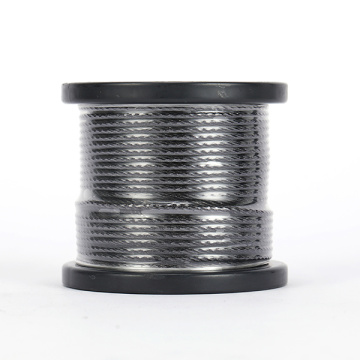


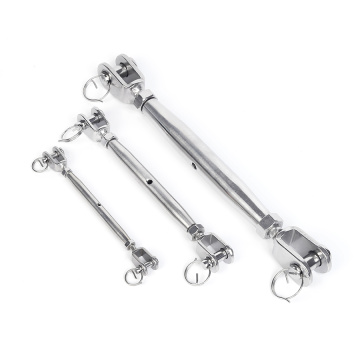


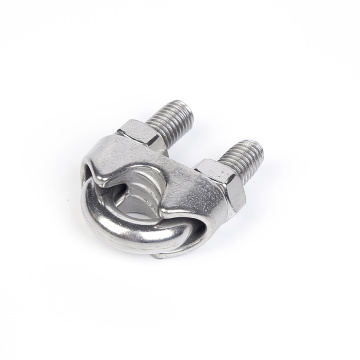
Sourcing high-performance stainless steel spring wire requires understanding material properties and application limits. Below are answers to the most frequent questions from procurement specialists.
Type 302 offers high tensile strength and good formability, making it ideal for standard industrial springs. Type 316 contains molybdenum, providing superior resistance to chlorides and acids. Choose 316 for marine or chemical processing applications where corrosion resistance is critical.
Yes. We support custom diameters ranging from 0.005 inches to larger gauges depending on volume. Temper levels (Full Spring, Music Spring, Half Hard) can be adjusted to meet specific load and fatigue requirements for your assembly.
Standard stock items ship within 2-3 business days. Custom drawn or heat-treated orders typically require 15-20 business days. Expedited shipping options are available for urgent production needs.
Yes, our austenitic stainless steel wires (302, 304, 316) are generally food-safe and resistant to cleaning agents. Please specify if you require specific FDA compliance documentation for your audit.
At Chenglu Stainless Steel Products Co., Ltd., quality is not an afterthought—it is engineered into every coil. Our Xinghua-based facility uses advanced drawing dies and precision annealing furnaces to ensure consistent mechanical properties.
We maintain tight diameter tolerances (±0.001") to ensure your springs fit perfectly without secondary machining. This reduces your assembly time and minimizes waste.
Our wire undergoes rigorous surface inspection to detect scratches, inclusions, or cracks. A smooth surface finish prevents stress concentrators that could lead to premature spring failure in cyclic loading.
Every batch is tested for tensile strength, hardness, and torsion performance. This consistency ensures that your final product performs reliably across its entire lifespan.
Stainless steel spring wire is a specialized form of stainless steel drawn into thin coils or straight lengths, optimized for high elasticity and fatigue resistance. Unlike standard structural wire, it is processed through cold drawing and heat treatment to achieve exceptional yield strength.
For B2B buyers, this material represents a balance of durability and versatility. It resists corrosion, maintains its shape under repeated stress, and operates effectively in extreme temperatures. It is the foundational component for manufacturing everything from tiny medical device springs to heavy-duty automotive suspension components.
Selecting the correct wire grade and temper is critical for cost-efficiency and product reliability. Over-specifying leads to unnecessary expense, while under-specifying risks field failures.
If your application involves moisture, chemicals, or salt spray, prioritize Grade 316. For dry or indoor environments, Grade 302/304 offers the best value-to-performance ratio.
Consult our technical data sheets for tensile strength curves based on wire diameter. Higher tempers (like Music Spring) provide maximum strength but lower ductility, which may affect coiling complexity.
Standard austenitic grades lose some strength at very high temperatures but remain flexible at cryogenic levels. If operating above 300°C, discuss special alloy options with our engineering team.
Use this checklist to evaluate potential suppliers and ensure your order meets all technical and logistical requirements before signing the contract.
Does the supplier provide Mill Test Reports (MTR) with every shipment?
Are tolerances specified per ASTM or EN standards?
Is the wire free of scale, scratches, and lubricant residue?
Does packaging prevent kinking and moisture damage during transit?
Can the supplier assist with grade selection or custom specs?
Can they handle volume spikes without compromising quality?
When evaluating potential partners, look beyond price. The most reliable suppliers demonstrate vertical integration, transparent communication, and a commitment to continuous improvement.
Chenglu controls the entire process from raw billet to finished coil. This eliminates third-party delays and allows for rapid adjustments to order specifications.
Our products meet global standards including ASTM, JIS, and DIN. This ensures compatibility with your existing supply chain and quality audits.
We assign dedicated account managers to streamline communication, track shipments, and resolve issues quickly, reducing your administrative burden.
Our technical team stays ahead of industry trends, offering advice on new alloys or treatments that can improve your product's performance.
Procurement challenges often stem from miscommunication or lack of technical clarity. Here are common pitfalls and how to avoid them.
Problem: Springs fail prematurely due to variable hardness across batches.
Solution: Require strict temper control and batch-specific testing reports from your supplier.
Problem: Scratches or pits initiate rust spots, especially in humid environments.
Solution: Specify surface finish requirements (e.g., BA, No. 4) and conduct incoming inspection.
Problem: Supplier substitutes 304 for 316 to cut costs, leading to field failures.
Solution: Include material certification clauses in contracts and perform spot checks with XRF analyzers.
Problem: Poor packaging causes tangles or damage during shipping, delaying production.
Solution: Verify packaging standards (wooden crates vs. pallets) and insurance coverage before shipment.
Stainless steel spring wire is indispensable across diverse sectors due to its unique combination of strength, flexibility, and corrosion resistance.
Used in clamps, latches, and conveyor springs where hygiene and resistance to cleaning chemicals are mandatory.
Essential for surgical instruments, implants, and diagnostic equipment requiring biocompatibility and sterilization resistance.
Employed in valve springs, clutch discs, and fasteners exposed to high heat and vibration.
Ideal for seals, gaskets, and filtration systems handling aggressive acids and solvents.
Grade 316 wire is critical for rigging, mooring lines, and underwater sensor mounts exposed to saltwater.
Used in tension cables, suspension systems, and decorative elements requiring long-term weather resistance.
Privacy statement: Your privacy is very important to Us. Our company promises not to disclose your personal information to any external company with out your explicit permission.
Fill in more information so that we can get in touch with you faster
Privacy statement: Your privacy is very important to Us. Our company promises not to disclose your personal information to any external company with out your explicit permission.