


Please Leave Us A Message
Privacy statement: Your privacy is very important to Us. Our company promises not to disclose your personal information to any external company with out your explicit permission.






Procurement teams often have specific questions before finalizing a supplier for industrial consumables. Below are answers to the most common inquiries regarding our stainless steel welding wire products.
We supply a comprehensive range of grades including the popular 304, 316L, and 321 series, as well as specialized alloys like 2205 duplex and 904L for highly corrosive environments. Our inventory is kept in stock to ensure immediate availability for urgent orders.
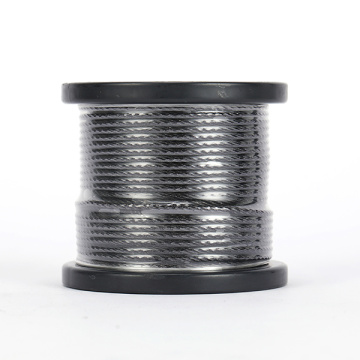
For wholesale procurement, we typically use wooden reels or large spools ranging from 15kg to 500kg depending on the wire diameter. We also offer custom packaging solutions upon request to accommodate your specific logistics and storage requirements.
Absolutely. We understand that weldability and arc stability are critical for your production lines. We encourage buyers to request sample kits to test our welding wire against their existing equipment and quality standards before committing to a full container load.
Standard grades usually ship within 7-15 days after payment confirmation. For customized specifications or larger volume orders, please allow an additional 5-10 days for production scheduling. We coordinate with reliable freight forwarders to minimize transit delays.
Located in Xinghua City, Jiangsu Province, our facility is equipped with state-of-the-art drawing machines, annealing furnaces, and automated packaging lines. This infrastructure allows us to maintain tight tolerances on wire diameter and surface finish, ensuring consistent feeding performance in automated welding systems.
Every batch of stainless steel welding wire undergoes strict chemical analysis and mechanical testing. We verify tensile strength, elongation, and corrosion resistance to meet international standards such as AWS and ISO. This commitment to precision helps our clients reduce rework rates and improve the structural integrity of their welded assemblies.
Stainless steel welding wire is a consumable electrode used in Gas Metal Arc Welding (GMAW) and Flux Cored Arc Welding (FCAW) processes. It serves as both the filler metal and the electrical conductor, creating a strong, corrosion-resistant bond between metal components.
Unlike carbon steel wire, stainless variants contain significant chromium and nickel content, which forms a passive oxide layer that protects the weld joint from rust and chemical degradation. This makes them indispensable for industries where hygiene, durability, and aesthetic appeal are paramount.
Our company focuses on producing high-purity wire that ensures smooth arc ignition and stable deposition rates, minimizing spatter and post-weld cleaning efforts for fabricators.
Selecting the correct welding consumable is critical for project success. Buyers should evaluate the following factors when sourcing stainless steel welding wire:
Match the wire grade to the parent metal. For example, use 308L wire for welding 304 stainless steel, and 316L wire for 316 materials. Using mismatched grades can lead to corrosion at the weld joint.
Choose diameter based on material thickness and welding position. Thinner wires (0.8mm - 1.0mm) are ideal for sheet metal and precise TIG/MIG applications, while thicker wires (2.0mm+) suit heavy structural fabrication.
Solid stainless wire requires external shielding gas, typically Argon-CO2 or Argon-Oxygen mixtures. Ensure your gas supply system is compatible with the wire specification to prevent porosity in the weld bead.
Verify that the supplier provides Mill Test Certificates (MTC) confirming the chemical composition and mechanical properties meet relevant industry standards like EN 10204 3.1 or AWS A5.9.
Use this checklist to evaluate potential suppliers and ensure you secure the best value for your stainless steel welding wire purchases.
Confirm the factory can handle your annual volume requirements without compromising quality during peak seasons.
Ask for third-party inspection reports and check if they have ISO 9001 certification for their manufacturing process.
A reliable supplier offers engineering support to help troubleshoot welding issues and optimize parameters for your specific application.
Ensure they have experience exporting to your region and can handle customs documentation smoothly to avoid port delays.
Look for transparent pricing that accounts for raw material fluctuations. Avoid suppliers with unusually low prices that may indicate inferior scrap metal usage.
Check their policy for handling defective batches or shipping errors. A responsive claims process protects your investment.
When evaluating partners for long-term collaboration, consider the following key attributes that define a top-tier stainless steel welding wire manufacturer.
Suppliers who control the entire process from raw steel melting to final wire drawing can better guarantee consistency and traceability of materials.
Prioritize manufacturers with a proven track record of exporting to North America, Europe, and Southeast Asia, as they are familiar with diverse regulatory requirements.
The best suppliers invest in R&D to develop new alloys and improved coating technologies that enhance welder comfort and joint strength.
Our stainless steel welding wire is utilized across a wide spectrum of sectors due to its versatility and durability.
Essential for constructing sanitary pipelines, tanks, and processing equipment where hygiene and easy cleaning are mandatory to prevent bacterial growth.
Used in cleanroom structures and bioreactor fabrication, requiring high-purity welds that resist harsh sterilization chemicals and solvents.
Critical for building pressure vessels and heat exchangers that must withstand extreme temperatures and corrosive chemical environments.
Ideal for structural steel connections, handrails, and facades where aesthetic appearance and long-term weather resistance are required.
Specialized grades like 316L are used for shipbuilding and offshore platforms to combat saltwater corrosion and structural fatigue.
Used in fermenters and bottling lines to ensure product purity and prevent metallic contamination in beverages.
Fabricators often encounter specific challenges when working with stainless steel. Understanding these issues helps in selecting the right wire and process parameters.
Caused by improper shielding gas flow or contaminated base metal. Ensuring clean surfaces and correct gas coverage eliminates gas pockets in the weld bead.
Excessive spatter reduces efficiency and increases cleanup time. Using wire with optimized flux coatings and adjusting voltage settings can significantly reduce spatter.
Occurs when carbon precipitates at grain boundaries during welding. Using low-carbon grades like 304L or 316L prevents this sensitization process.
Fluctuating arcs lead to uneven weld beads. High-quality wire with uniform conductivity and smooth surface finish ensures a stable, consistent arc.
Privacy statement: Your privacy is very important to Us. Our company promises not to disclose your personal information to any external company with out your explicit permission.
Fill in more information so that we can get in touch with you faster
Privacy statement: Your privacy is very important to Us. Our company promises not to disclose your personal information to any external company with out your explicit permission.