


Please Leave Us A Message
Privacy statement: Your privacy is very important to Us. Our company promises not to disclose your personal information to any external company with out your explicit permission.


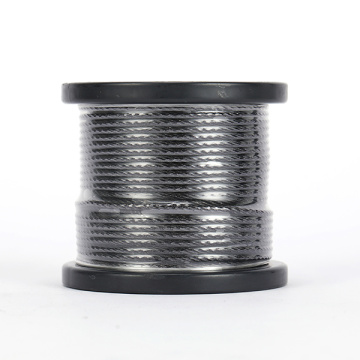




Stainless welding wire is a specialized filler metal designed for joining stainless steel components through various arc welding processes, including MIG/GMAW and TIG/GTAW. It serves as the critical bridge that fuses base metals while maintaining the corrosion-resistant properties essential to stainless steel applications.
Unlike carbon steel welding consumables, stainless steel welding wire formulations include specific alloying elements such as chromium and nickel. These additions ensure the weld joint achieves comparable mechanical strength and chemical resistance to the parent material. This makes it indispensable in industries where structural integrity and hygiene standards are non-negotiable.
Provides consistent electrical conductivity and stable arc characteristics during the welding process, ensuring smooth deposition and minimal spatter for professional-grade joints.
Engineered to match specific stainless steel grades (such as 304, 316, and 430), ensuring the welded assembly resists rust, chemicals, and extreme temperatures throughout its service life.
At Chenglu Stainless Steel Products Co., Ltd., quality is not an afterthought—it is embedded in every stage of production. Our manufacturing facility in Xinghua City, Jiangsu Province, utilizes advanced equipment and rigorous testing protocols to deliver high-quality stainless steel welding wire that meets international benchmarks.
Our state-of-the-art drawing and annealing lines ensure precise diameter control and uniform mechanical properties, reducing waste and improving welding consistency for your projects.
Every batch undergoes strict chemical composition analysis and tensile testing. This guarantees that our stainless steel welding wire performs reliably under demanding industrial conditions.
Our products are engineered to meet global standards, giving you confidence that your supply chain remains compliant with international trade and safety regulations.
Backed by years of expertise, our technical team continuously optimizes product structures to solve complex welding challenges and enhance performance.
Selecting the correct stainless welding wire is critical for ensuring weld durability, corrosion resistance, and cost-efficiency. With numerous grades and types available, procurement managers must evaluate several key factors to match the wire to their specific application requirements.
The most common mistake is using the wrong filler metal. For 304 stainless steel, use ER308 wire. For 316 marine-grade applications, ER316 is required to maintain molybdenum-based corrosion resistance. Mismatched wires can lead to premature failure.
Different processes require different wire specifications. MIG welding typically uses solid or flux-cored wires, while TIG welding requires bare filler rods. Ensure the wire diameter matches your machine's capabilities and desired deposition rate.
For food processing or pharmaceutical equipment, choose wires that produce clean, low-spatter welds requiring minimal post-weld cleaning. This reduces labor costs and maintains the aesthetic integrity of the final product.
High-stress environments demand wires with superior tensile strength and impact resistance. Verify that the filler metal meets the necessary industry standards (such as AWS A5.9) for your specific structural application.
Before placing an order for stainless welding wire, use this comprehensive checklist to verify supplier capability and product suitability. This guide helps mitigate risk and ensures you receive materials that perform as expected.
Procuring stainless welding wire involves navigating several common pitfalls that can disrupt production schedules and increase costs. Understanding these challenges allows buyers to proactively address them.
Low-quality wires may deviate from specified alloy ranges, leading to poor corrosion resistance and weld brittleness. Always request mill test certificates (MTC) to verify compliance.
Improper storage can lead to oil, grease, or iron particle contamination on the wire surface. This causes porosity and defects in the weld. Ensure suppliers use vacuum degassing and clean packaging.
Wire that varies in diameter can cause feeding issues in automated systems, leading to arc instability and inconsistent bead appearance. Strict tolerance controls are essential for high-speed production.
Unreliable suppliers often miss delivery deadlines, halting fabrication lines. Partner with established manufacturers like Chenglu Stainless Steel Products Co., Ltd., who prioritize on-time delivery and inventory management.
Choosing the right partner is as important as choosing the right product. When evaluating suppliers for stainless steel welding wire, consider the following criteria to ensure a reliable, long-term relationship.
Get answers to the most common questions about sourcing and using stainless welding wire for your industrial applications.
MIG (GMAW) welding wire is typically fed automatically through a gun and is suitable for high-speed, semi-automatic, or robotic welding. TIG (GTAW) filler rods are manually fed and offer greater precision, making them ideal for thin materials or critical aesthetic welds. Both serve the same fundamental purpose but differ in application method and efficiency.
304 stainless steel (using ER308 filler wire) is the most widely used grade for general-purpose applications. It offers excellent corrosion resistance and formability, making it suitable for food processing, chemical containers, and architectural applications. For marine or highly corrosive environments, 316 stainless steel (ER316) is recommended.
We employ advanced production equipment and rigorous testing instruments at our Xinghua City facility. Every batch undergoes strict chemical analysis and mechanical testing to ensure it meets international standards. Our experienced technical team continuously monitors the production process to maintain consistency and reliability.
Yes, we understand that different welding processes require specific wire diameters and packaging formats. We work closely with clients to tailor our products to their exact specifications, ensuring seamless integration into their existing workflows. Contact us to discuss your bulk order requirements.
Stainless welding wire is essential in food processing, pharmaceuticals, chemicals, brewing, construction, and manufacturing. Its resistance to corrosion, heat, and staining makes it ideal for applications where hygiene, durability, and aesthetic appeal are paramount.
Privacy statement: Your privacy is very important to Us. Our company promises not to disclose your personal information to any external company with out your explicit permission.
Fill in more information so that we can get in touch with you faster
Privacy statement: Your privacy is very important to Us. Our company promises not to disclose your personal information to any external company with out your explicit permission.