


Please Leave Us A Message
Privacy statement: Your privacy is very important to Us. Our company promises not to disclose your personal information to any external company with out your explicit permission.


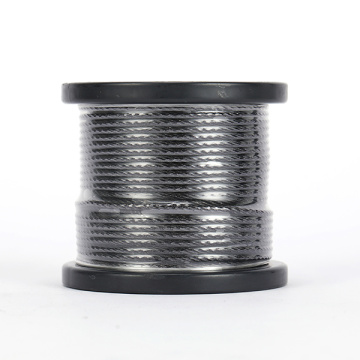


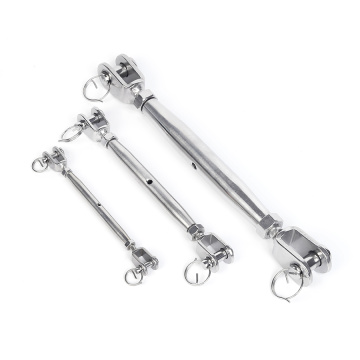


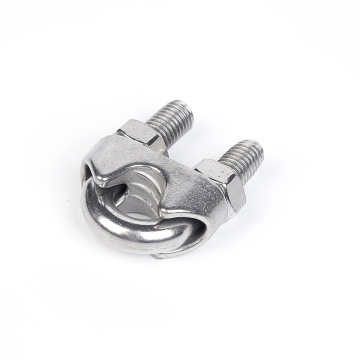
Stainless steel wire is a versatile metal product manufactured from high-grade stainless steel alloys, designed to provide exceptional strength, corrosion resistance, and durability across demanding industrial applications. Unlike standard carbon steel wires, stainless variants offer superior performance in harsh environments where rust, chemical exposure, or extreme temperatures are concerns.
Superior protection against rust and chemical degradation in harsh environments.
Maintains structural integrity under heavy loads and extreme conditions.
Reduces replacement frequency and total cost of ownership over time.
At Chenglu Stainless Steel Products Co., Ltd., our manufacturing process combines advanced production equipment with rigorous quality control measures to deliver stainless steel wire that meets international standards. Located in Xinghua City, Jiangsu Province, our facility houses experienced technical teams dedicated to maintaining consistent quality across every batch produced.
Our state-of-the-art manufacturing lines utilize precision machinery for wire drawing, annealing, and surface treatment. This technological advantage ensures uniform diameter tolerance, consistent mechanical properties, and superior surface finish across all stainless steel wire products.
Every production batch undergoes thorough testing using specialized instruments including tensile strength testers, corrosion resistance analyzers, and dimensional measurement systems. Our quality assurance team monitors critical parameters throughout the manufacturing process to guarantee compliance with customer specifications.
We supply multiple stainless steel grades including 304, 316, 316L, 321, and 410, each optimized for specific application requirements. Our material experts help procurement teams select the optimal grade based on environmental conditions, chemical exposure, and mechanical load requirements.
Our systematic approach to process control includes real-time monitoring of drawing speeds, annealing temperatures, and cooling rates. This level of control delivers batch-to-batch consistency, reducing your risk of production disruptions caused by material variability.
Choosing the correct stainless steel wire specification requires careful evaluation of your application's unique demands. The right selection impacts not only product performance but also total cost of ownership, maintenance requirements, and operational safety. Our procurement guide addresses the key factors that professional buyers must consider when sourcing stainless steel wire.
Assess the operating environment thoroughly before selecting a wire grade. Marine environments demand 316 or 316L grades for superior chloride resistance, while indoor applications may only require standard 304 stainless steel. Chemical processing applications require specific alloy selections based on the exact chemicals involved.
Determine the required tensile strength, ductility, and fatigue resistance for your application. Heavy-duty rigging applications need high-tensile wire rope constructions, while decorative applications may prioritize surface finish over maximum strength. Understanding these requirements prevents over-specification and reduces unnecessary costs.
Select the appropriate construction format: single strand wire for simple applications, stranded wire rope for flexibility requirements, or welded mesh for structural applications. Each construction type offers different performance characteristics regarding flexibility, load capacity, and installation convenience.
Consider whether you need bright annealed finish for aesthetic applications, pickled and passivated surfaces for corrosion resistance, or coated finishes for enhanced durability. Surface treatment significantly affects both appearance and long-term performance in your specific use case.
Specify precise diameter requirements with appropriate tolerance ranges. Standard tolerances suit most general applications, while precision tolerances are necessary for specialized manufacturing processes. Clear specification prevents compatibility issues with existing tooling and equipment.
Verify that your supplier provides necessary certifications and test reports for regulatory compliance. Industries such as food processing, pharmaceuticals, and construction often require specific material certifications and traceability documentation for audit purposes.
A structured procurement checklist helps ensure you evaluate all critical factors when sourcing stainless steel wire from potential suppliers. Use this comprehensive checklist to compare vendors systematically and make data-driven purchasing decisions that protect your supply chain quality.
Confirm manufacturer credentials, factory audits, and production capacity match your volume requirements.
Request mill test certificates (MTC) verifying chemical composition and mechanical properties for each batch.
Review third-party inspection reports and in-house testing data for tensile strength, corrosion resistance, and dimensional accuracy.
Compare total landed costs including freight, tariffs, and payment terms rather than unit price alone.
Evaluate historical on-time delivery rates and current production scheduling to ensure supply continuity.
Confirm warranty terms, technical support availability, and resolution procedures for quality-related issues.
Procurement professionals frequently encounter specific challenges when sourcing stainless steel wire internationally. Understanding these common problems and their solutions helps you avoid costly mistakes, reduce supply chain risks, and build more reliable supplier relationships.
Some suppliers substitute lower-grade stainless steel for higher-grade specifications, leading to premature corrosion failures and unexpected maintenance costs in your final products.
Solution:Require mill test certificates with elemental analysis for every shipment. Conduct independent laboratory verification tests on incoming materials to confirm grade authenticity before production use.
Wire diameter variations outside specified tolerances can cause feeding problems in automated manufacturing equipment, resulting in production downtime and scrap material waste.
Solution:Specify tight tolerance ranges in purchase orders and request pre-shipment dimensional inspection reports. Implement incoming quality control checks using calibrated micrometers on all received batches.
Scratches, oil stains, or iron particle contamination on stainless steel wire surfaces compromise corrosion resistance and aesthetic quality, particularly critical for food processing and medical applications.
Solution:Work with suppliers who implement proper handling procedures, clean packaging, and protective coatings during shipping. Specify surface treatment requirements clearly in technical specifications.
Unpredictable lead times and inconsistent production schedules from overseas suppliers can disrupt your manufacturing operations and create inventory management challenges.
Solution:Establish clear communication protocols with regular production status updates. Maintain safety stock levels and develop relationships with multiple qualified suppliers to mitigate single-source risks.
Selecting the right stainless steel wire supplier directly impacts your product quality, production efficiency, and overall procurement costs. Professional buyers should evaluate potential suppliers against these essential criteria to build a reliable and competitive supply chain.
Professional procurement buyers commonly have questions about stainless steel wire specifications, ordering processes, and quality assurance. This FAQ section addresses the most frequent inquiries to streamline your sourcing decisions and improve supplier communication.
The most widely used stainless steel wire grades include 304 and 304L for general-purpose applications requiring good corrosion resistance, 316 and 316L for marine and chemical processing environments where superior chloride resistance is needed, 321 for high-temperature applications, and 410 for applications requiring magnetic properties and moderate corrosion resistance. Selection depends on your specific environmental conditions, mechanical requirements, and budget considerations.
Diameter tolerance directly impacts how smoothly wire feeds through your manufacturing equipment. Tighter tolerances (such as ±0.01mm) are essential for precision applications like electronics assembly and medical device manufacturing, while standard tolerances (±0.05mm to ±0.1mm) typically suffice for construction and general fabrication. Specifying appropriate tolerance levels prevents equipment jams, reduces scrap rates, and optimizes your total material costs.
Essential documentation includes Mill Test Certificates (MTC) with elemental analysis and mechanical property verification, ISO 9001 quality management certification for the manufacturer, and industry-specific certifications depending on your application (such as FDA compliance for food processing or CE marking for European market products). Third-party inspection reports from recognized laboratories add additional confidence in material authenticity and quality consistency.
Standard stainless steel wire orders typically require 15-25 business days for production and shipping, depending on quantity, specifications, and destination. Stock items in common diameters and grades may ship within 3-7 business days. Custom specifications or large-volume orders may require extended timelines. Establish clear delivery schedules with your supplier and maintain safety stock levels to prevent production disruptions.
Wire rope construction selection depends on load requirements, flexibility needs, and wear resistance expectations. Common constructions include 6x19 for general rigging with good balance of flexibility and durability, 6x36 for applications requiring higher flexibility, and 8x19 for heavy-duty crane applications. Consider factors such as minimum breaking force, fatigue resistance, rotation resistance, and compatibility with your existing sheaves and drums when making your selection.
Yes, reputable manufacturers offer customization services for wire length, coil weight, and packaging configurations. You can specify exact cut lengths, reel dimensions, or coil weights optimized for your production equipment and storage capabilities. Proper packaging protects against damage during transit and includes moisture barriers, protective coatings, and clear labeling for easy identification and inventory management.
Privacy statement: Your privacy is very important to Us. Our company promises not to disclose your personal information to any external company with out your explicit permission.
Fill in more information so that we can get in touch with you faster
Privacy statement: Your privacy is very important to Us. Our company promises not to disclose your personal information to any external company with out your explicit permission.