


Please Leave Us A Message
Privacy statement: Your privacy is very important to Us. Our company promises not to disclose your personal information to any external company with out your explicit permission.


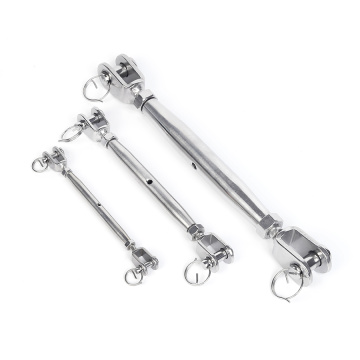


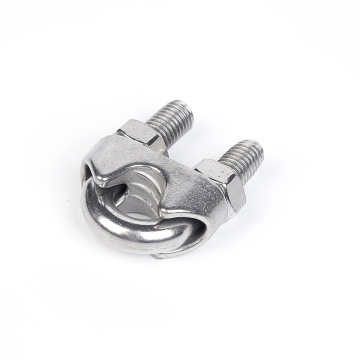


A stainless steel pulley is a critical component in material handling systems, designed to guide and support the movement of wire rope, cable, or conveyor belts. Unlike standard carbon steel pulleys, stainless variants offer superior resistance to corrosion, making them indispensable for industries where hygiene and environmental durability are paramount.
For procurement managers in food processing, pharmaceuticals, marine applications, and chemical plants, choosing the right sheave ensures minimal downtime and reduced maintenance costs. The core value lies in the material's ability to withstand harsh environments without degrading, thereby protecting your supply chain investments.
Our manufacturing process focuses on precision engineering to ensure smooth rope engagement, reducing friction and extending the lifespan of your entire cabling system. By selecting high-quality stainless components, you directly lower your total cost of ownership over time.
At Chenglu Stainless Steel Products Co., Ltd., quality is not just a checkpoint; it is the foundation of our production philosophy. Our state-of-the-art facility in Xinghua City utilizes advanced welding and forming technologies to produce stainless steel pulleys that meet rigorous international standards.
We employ experienced technical teams to oversee every stage of production, from raw material selection to final inspection. This ensures that each pulley maintains consistent dimensional accuracy, which is crucial for preventing wear on wire ropes and ensuring safe load handling.
Our commitment to "integrity-based" operations means we source only certified stainless steel materials. Whether you require 304 or 316 grade stainless steel for specific corrosion resistance needs, we guarantee material traceability and performance consistency across all batches.

Selecting the optimal stainless steel pulley requires balancing technical specifications with your operational environment. A mismatch in material grade or groove design can lead to premature failure and costly safety hazards. Here is how to make an informed decision:
Marine & Chemical: Opt for 316 stainless steel for maximum resistance to saltwater and corrosive chemicals.
Food & Pharma: 304 stainless steel is typically sufficient and offers excellent hygienic properties for processing environments.
Choose between plain bearing (slipper) pulleys for low-speed, heavy-load applications and roller bearing pulleys for high-speed operations where minimizing friction is critical.
Ensure the pulley groove matches your wire rope diameter precisely. An oversized groove causes rope flattening and instability, while an undersized groove increases friction and heat buildup.
Calculate the dynamic load factors, including shock loads and acceleration forces. Always select a pulley with a safety factor that exceeds your maximum operating tension to ensure long-term reliability.

Before finalizing your purchase order, use this comprehensive checklist to verify that your supplier and product specifications align with your business requirements. This proactive approach minimizes procurement risks and ensures operational continuity.
Confirm that the supplier provides Material Test Certificates (MTC) verifying the stainless steel grade (e.g., ASTM A276).
Check for smooth, deburred edges and appropriate surface polishing (e.g., Ra value) to prevent rope abrasion.
Verify if the manufacturer can accommodate custom bore sizes, flange configurations, or specialized mounting holes.
Ensure the quoted production timeline accounts for potential holidays or material shortages to avoid project delays.
Clarify warranty terms regarding material defects and availability of after-sales technical support for installation.
Confirm that packaging protects against moisture and physical damage during transit, especially for ocean freight.
Procuring industrial components often involves navigating common pitfalls. Understanding these issues beforehand allows you to negotiate better terms and specify products that perform reliably in the field.
The Issue: When stainless steel pulleys contact dissimilar metals (like aluminum or carbon steel) in the presence of an electrolyte, rapid corrosion can occur.
The Solution: Use insulating spacers or bushings between different metal components. Ensure all fasteners are also stainless steel or compatible non-reactive materials.
The Issue: Using a pulley with a groove radius significantly larger than the rope diameter causes the rope to flatten, leading to internal wire breakage and reduced strength.
The Solution: Strictly adhere to the manufacturer's recommended groove dimensions. Measure your actual rope diameter before ordering, as ropes can stretch or compress over time.
The Issue: Some suppliers may sell low-grade ferritic stainless steel (like 430) claiming it is austenitic (304/316), which fails in corrosive environments.
The Solution: Request third-party lab testing results or use a simple magnetic spot test (304/316 should be non-magnetic or weakly magnetic, while 430 is strongly magnetic). Always demand mill certificates.
The Issue: Standard sealed bearings can fail quickly when exposed to dust, water, or chemicals, causing the pulley to seize.
The Solution: Specify pulleys with stainless steel shields or specialized seals (e.g., Nitrile rubber) suitable for your specific environmental conditions. Consider self-lubricating bearings for hard-to-maintain locations.
When evaluating potential partners for your stainless steel pulley sourcing needs, look beyond price. The following criteria highlight what distinguishes a reliable, long-term manufacturing partner from a commodity trader.
Chenglu Stainless Steel Products Co., Ltd. combines R&D, production, and sales under one roof. This vertical integration allows for tighter quality control, faster turnaround times, and more competitive pricing compared to trading companies.
Look for suppliers with proven experience in your specific sector. Chenglu's background in food processing, pharmaceuticals, and chemical industries demonstrates an understanding of the unique hygiene and corrosion challenges you face.
A true partner prioritizes your success. Evaluate their responsiveness, willingness to provide samples, and flexibility in handling custom orders. Chenglu's corporate spirit of "innovation-based" growth indicates a commitment to evolving with client needs.
Get answers to the most common technical and logistical questions buyers ask when sourcing stainless steel pulleys for industrial applications.
The primary difference lies in corrosion resistance. 304 stainless steel is a general-purpose austenitic steel suitable for indoor or mild outdoor environments. 316 stainless steel contains molybdenum, which significantly enhances resistance to chlorides and acids, making it the preferred choice for marine environments, coastal installations, and chemical processing plants where exposure to salt or harsh chemicals is frequent.
Yes, stainless steel pulleys generally maintain good mechanical properties at elevated temperatures. However, the limiting factor is often the bearing type. While the stainless steel shell can withstand high heat, standard rubber seals or lubricants in plain bearings may degrade. For high-temperature applications, specify pulleys with high-temperature resistant seals and lubricants, such as those rated for continuous operation above 200°C (392°F).
Lead times vary based on complexity and quantity. Standard off-the-shelf pulleys may ship within 3-7 days. Custom-designed pulleys, requiring specific tooling or machining, typically take 15-25 working days. Factors such as material availability, order volume, and shipping method also impact the final delivery date. It is advisable to plan your procurement cycle with these timelines in mind to avoid production stoppages.
The pulley diameter should generally be at least 18 to 20 times the diameter of the wire rope to minimize bending stress and extend rope life. For example, if you are using a 10mm wire rope, the pulley groove diameter should be approximately 180-200mm. Refer to industry standards like ISO or DNVGL for specific recommendations based on your application's safety factors and duty cycle.
Yes, we specialize in OEM and ODM services. Our experienced technical team can work with your drawings or specifications to manufacture custom stainless steel pulleys tailored to your exact requirements. We also assist in optimizing designs for cost-efficiency and performance. Contact us with your technical specifications to receive a detailed quote and feasibility assessment.
Privacy statement: Your privacy is very important to Us. Our company promises not to disclose your personal information to any external company with out your explicit permission.
Fill in more information so that we can get in touch with you faster
Privacy statement: Your privacy is very important to Us. Our company promises not to disclose your personal information to any external company with out your explicit permission.