


Please Leave Us A Message
Privacy statement: Your privacy is very important to Us. Our company promises not to disclose your personal information to any external company with out your explicit permission.


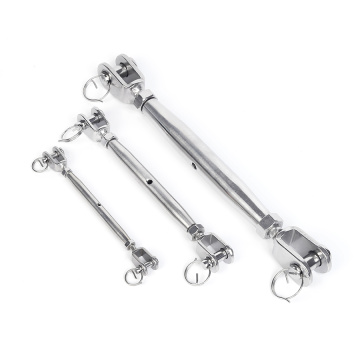


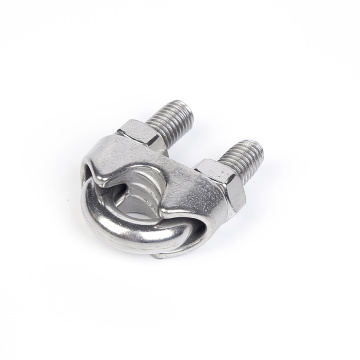


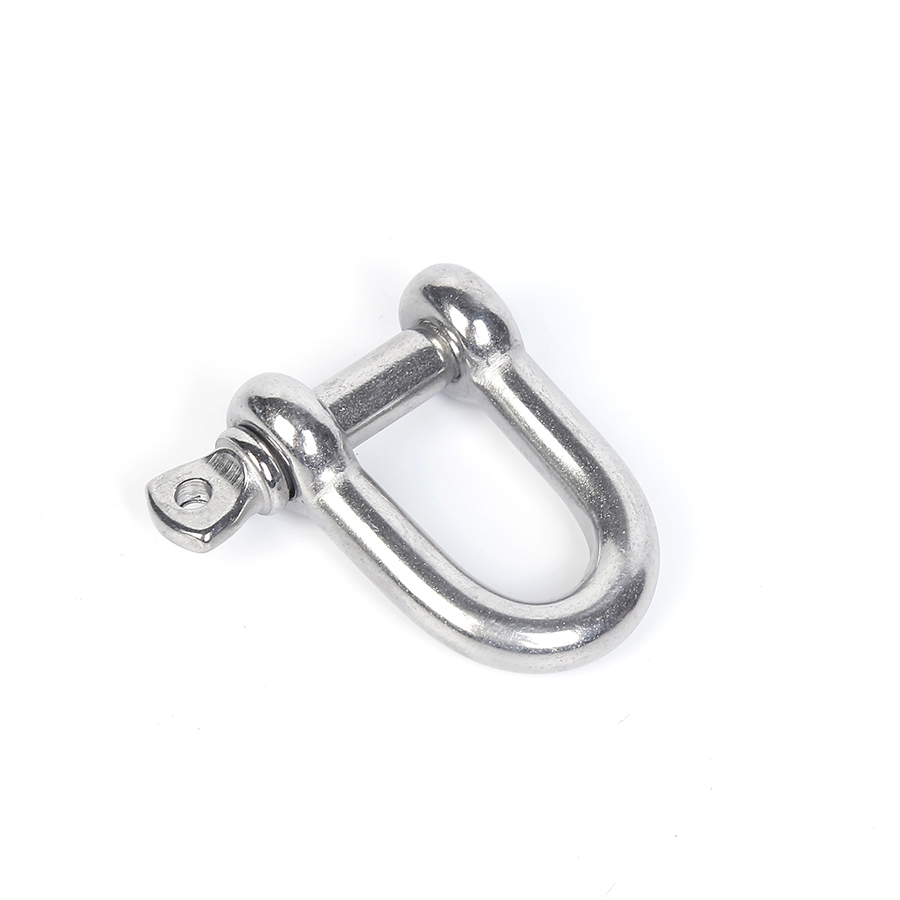
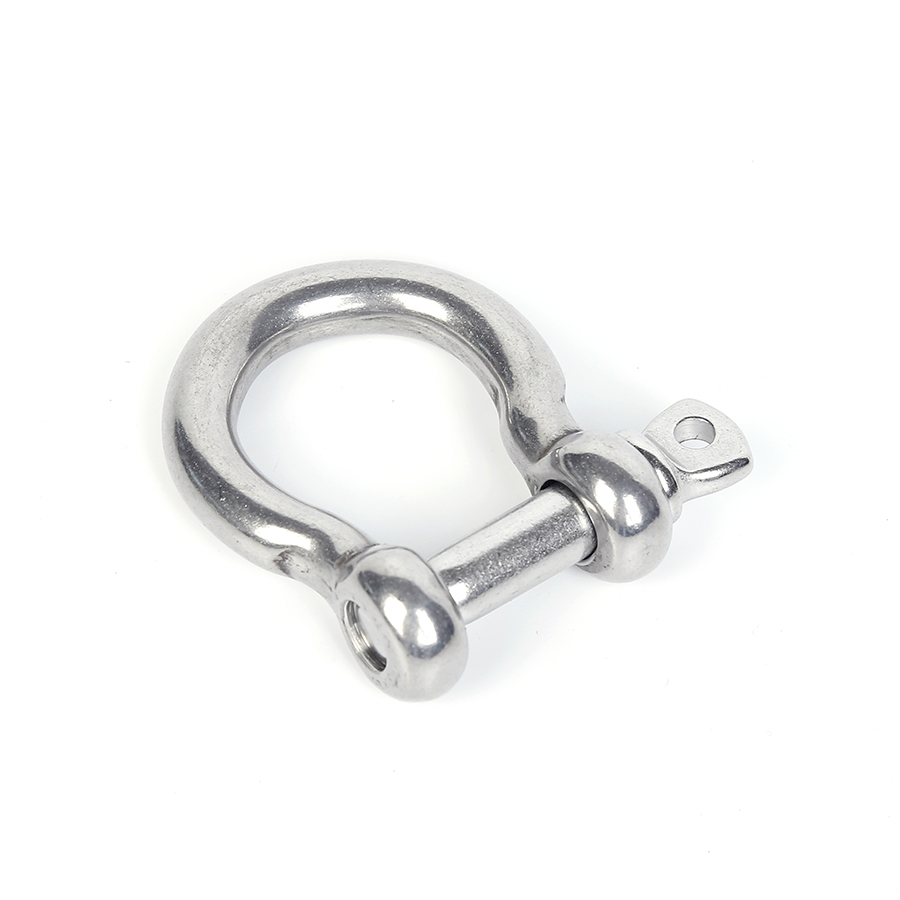
A stainless snap shackle is a high-strength mechanical fastener designed to connect wire ropes, chains, or cables securely while allowing quick assembly and disassembly. Unlike traditional shackles that require tools for installation, the snap mechanism enables rapid connection and release, making it ideal for applications where time-sensitive access or frequent reconfiguration is necessary.
Manufactured from premium-grade stainless steel — typically AISI 304 or AISI 316 — these shackles offer exceptional corrosion resistance, ensuring reliable performance in harsh environments including marine, chemical processing, and outdoor infrastructure. The material choice directly impacts your total cost of ownership: investing in certified stainless steel reduces replacement frequency, downtime, and long-term maintenance expenses.
At Chenglu Stainless Steel Products Co., Ltd., we produce stainless snap shackles engineered to meet international load ratings and quality benchmarks. Our manufacturing process combines precision forging, controlled heat treatment, and rigorous surface finishing to deliver components that perform consistently under demanding conditions.
Quality is not an afterthought — it is built into every stage of our production workflow. Located in Xinghua City, Jiangsu Province, our facility houses advanced production equipment and testing instruments operated by an experienced technical team committed to international standards.
Our corporate spirit of "integrity-based, innovation-based" drives continuous improvement in both product design and manufacturing processes. We continuously optimize product structures to meet evolving market demands, providing buyers with components that reduce risk and simplify procurement workflows.
Selecting the correct stainless snap shackle requires evaluating several critical factors. Making the right choice protects your project from premature failure, unexpected downtime, and costly replacements. Here are the key parameters to consider:
AISI 304 stainless steel provides excellent general-purpose corrosion resistance for indoor and mild outdoor applications. AISI 316 (marine-grade) offers superior resistance to chloride-induced corrosion and is recommended for coastal, marine, or chemically aggressive environments. Choosing the wrong grade can lead to premature degradation and increased lifecycle costs.
Always verify the Working Load Limit (WLL) and Minimum Breaking Force (MBF) against your application's maximum expected load. Apply a safety factor of at least 4:1 for static rigging applications and higher for dynamic or shock-loading scenarios. Underspecifying load capacity is one of the most common causes of field failures.
Match the shackle size (measured by bow diameter and body width) to the connecting hardware. Ensure the pin type — whether bolt-type, screw-pin, or safety-nut — aligns with your security and accessibility requirements. Bolt-type pins provide higher shear strength and are preferred in structural applications.
For regulated industries such as construction, offshore, and heavy lifting, request test certificates and mill reports that trace material composition and mechanical properties back to the original steel melt. Certified products simplify compliance audits and protect against liability exposure.
Use this checklist during supplier evaluation to ensure you select a vendor who can consistently deliver quality, on-time, and compliant stainless snap shackles for your supply chain.
Procurement professionals frequently encounter challenges when sourcing stainless steel rigging components. Understanding these problems in advance helps you avoid costly mistakes and build stronger supplier relationships.
This is often caused by substandard raw materials or incorrect heat treatment. Genuine AISI 316 contains molybdenum (2–3%) which significantly enhances pitting and crevice corrosion resistance. Buyers should always request material certification with spectrometer analysis results to verify actual chemical composition rather than relying on verbal assurances.
Standard screw-pin shackles can gradually loosen under sustained vibration. For these applications, specify bolt-type pins with locking nuts or use safety-wire techniques. Always communicate dynamic-load requirements to your supplier so they can recommend the appropriate pin configuration and safety factor.
Inconsistent load ratings typically indicate inadequate quality control during forging or heat treatment. Reputable manufacturers maintain documented process controls, conduct batch-level testing, and retain traceability records. If a supplier cannot provide evidence of consistent batch testing, consider this a red flag for future procurement decisions.
Customs delays often stem from incomplete documentation, misclassified HS codes, or missing country-of-origin declarations. Work with suppliers who provide complete export documentation including commercial invoices, packing lists, material certificates, and bill of lading well in advance. Pre-clearance arrangements can significantly reduce clearance timelines.
Stainless snap shackles serve diverse industries where secure, corrosion-resistant connections are essential. Their versatility makes them suitable for applications ranging from food-grade processing to heavy industrial rigging.
Stainless steel's hygienic, non-porous surface meets food-grade sanitation requirements. Snap shackles are used in conveyor systems, tank rigging, and overhead transport where frequent cleaning and chemical exposure demand corrosion-free hardware.
AISI 316 stainless snap shackles resist saltwater corrosion and are widely used in mooring lines, rigging assemblies, boat fittings, and offshore platform connections where environmental durability is critical for operational safety.
Chemical processing plants use stainless shackles for pipeline supports, reactor rigging, and equipment suspension where exposure to acids, alkalis, and solvents would rapidly degrade carbon steel components.
Structural rigging, temporary scaffolding ties, and permanent architectural cable installations benefit from the high strength-to-weight ratio and weather resistance of stainless steel snap shackles.
Antenna mounting, guy wire tensioning, and tower rigging applications rely on stainless shackles for long-term reliability in exposed outdoor environments where maintenance access is limited and costly.
Zipline systems, climbing rigs, stage rigging, and adventure park installations require certified stainless shackles that combine high load capacity with rapid deployment capabilities for safety-critical operations.
Choosing the right manufacturing partner is as important as selecting the right product specifications. Below are criteria to evaluate when building your approved supplier list for stainless steel rigging components.
Prioritize suppliers with vertically integrated operations — those that control the entire process from raw material sourcing through forging, finishing, and testing. This level of integration provides greater consistency, faster turnaround times, and tighter quality control compared to trading companies or assembly-only facilities.
An experienced technical team demonstrates deeper understanding of material science, load dynamics, and application-specific requirements. Suppliers who proactively advise on material selection, sizing, and installation best practices add significant value beyond simple component fulfillment.
Look for documented quality management procedures including incoming material inspection, in-process monitoring, final product testing, and traceability protocols. Suppliers who maintain detailed quality records enable smoother audits and faster root-cause analysis when issues arise.
The lowest unit price does not always represent the best total cost. Evaluate suppliers based on their commitment to continuous improvement, R&D investment, and customer-centric service philosophy. Partners who invest in technology and process optimization deliver better value over multiple ordering cycles.
These answers address the most common questions procurement professionals ask when evaluating stainless snap shackle suppliers and specifications.
AISI 304 contains 18% chromium and 8% nickel, providing strong general corrosion resistance for indoor and moderate outdoor use. AISI 316 adds 2–3% molybdenum, dramatically improving resistance to chloride-induced pitting and crevice corrosion. For marine, coastal, or chemical-exposed environments, AISI 316 is strongly recommended despite a slightly higher initial cost.
Yes. Most established manufacturers offer OEM and ODM services, including custom bow diameters, body widths, pin lengths, and specialized surface finishes such as electropolishing or specific grit blasting levels. Communicate your exact dimensional tolerances, load requirements, and environmental conditions to receive accurate customization recommendations.
MOQ policies vary by manufacturer and specification complexity. Standard sizes typically have lower MOQ thresholds due to existing tooling and inventory. Custom-sized or specialty-finish shackles may carry higher MOQs to amortize setup costs. Discuss your projected annual volume with your supplier — many manufacturers offer tiered pricing and flexible MOQ terms for committed buyers.
Request the manufacturer's published load rating tables along with supporting test certificates. Legitimate suppliers provide Working Load Limit (WLL) and Minimum Breaking Force (MBF) data derived from destructive testing of representative samples. For critical applications, consider commissioning independent third-party testing to validate claims before placing large-volume orders.
Proper packaging includes individual poly bags or bubble wrap for each shackle to prevent surface scratching and cross-contamination, followed by sturdy cartons or wooden crates for bulk shipment. Moisture-absorbing desiccant packets should be included for ocean freight. Request photos of packaging before shipment to verify protection standards are met.
Privacy statement: Your privacy is very important to Us. Our company promises not to disclose your personal information to any external company with out your explicit permission.
Fill in more information so that we can get in touch with you faster
Privacy statement: Your privacy is very important to Us. Our company promises not to disclose your personal information to any external company with out your explicit permission.