


Please Leave Us A Message
Privacy statement: Your privacy is very important to Us. Our company promises not to disclose your personal information to any external company with out your explicit permission.


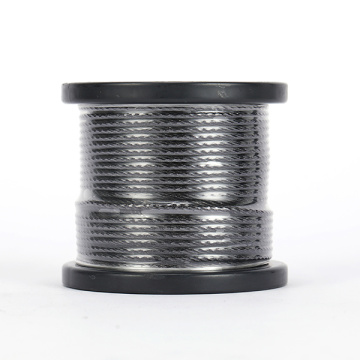


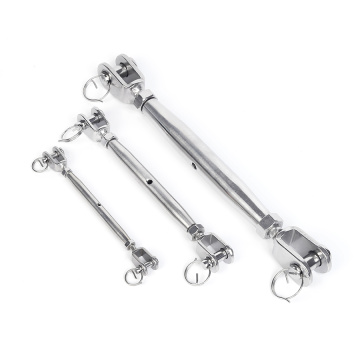


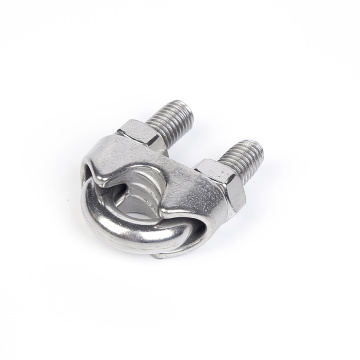


Stainless steel spring steel is a specialized category of high-performance alloy designed to withstand extreme mechanical stress and fatigue over repeated cycles. Unlike standard structural stainless steels, these materials are engineered with precise carbon and chromium contents to deliver exceptional tensile strength, elasticity, and corrosion resistance.
For procurement professionals, this material represents the intersection of durability and precision. Whether used in critical automotive suspension components, aerospace actuators, or heavy-duty industrial filters, stainless steel spring steel ensures that your final product maintains its shape and function under pressure, even in harsh environments.
Key Benefit: By selecting certified stainless steel spring steel, you reduce warranty claims and maintenance costs associated with component failure.
At Chenglu Stainless Steel Products Co., Ltd., quality is not an afterthought—it is the foundation of our production process. Our state-of-the-art facilities in Xinghua City utilize advanced cold-rolling and heat-treatment technologies to ensure every batch of stainless steel spring steel meets rigorous international standards.
We employ automated rolling mills and precision cutting machinery to achieve tight tolerances. This consistency reduces your downstream processing time and material waste.
Every coil undergoes multi-stage inspection, including surface defect analysis, hardness testing, and tensile strength verification. We provide mill test certificates (MTC) with every shipment.
Our raw materials are sourced from certified smelters, ensuring consistent chemical composition. This prevents unexpected variations in spring performance during your manufacturing process.
Selecting the correct grade and specification of stainless steel spring steel requires balancing technical requirements with supply chain reliability. Here is a buyer's guide to making the right choice.
302 Stainless Steel: Offers the highest strength and hardness, ideal for heavy-duty springs where corrosion resistance is secondary.
304 Stainless Steel: The industry standard for general-purpose applications, providing a balanced mix of formability and spring properties.
316 Stainless Steel: Essential for marine, chemical, or pharmaceutical applications due to superior chloride-corrosion resistance.
Spring steel is typically supplied in specific tempers such as Music Wire (MW), Hard Drawn (HD), or Semi-Rigid (SR). Your application dictates the required temper:
Before finalizing your purchase order for stainless steel spring steel, verify these critical factors to mitigate risk and ensure production continuity.
Ensure the supplier provides valid Mill Test Certificates (MTC) confirming chemical composition and mechanical properties.
Inspect for scratches, pits, or scale. A smooth surface finish is critical for fatigue life in dynamic spring applications.
Confirm thickness and width tolerances match your engineering drawings. Tight tolerances reduce machining scrap rates.
Choose a manufacturer with proven capacity to handle bulk orders and maintain consistent lead times.
When sourcing stainless steel spring steel, partnering with a vertically integrated manufacturer offers significant advantages over trading companies. Here is what to look for.
A strong supplier provides technical guidance on grade selection and heat treatment options. They should help you optimize cost without compromising performance.
Look for suppliers with advanced equipment and experienced teams. This ensures they can meet large-volume demands while maintaining strict quality control.
Your supplier should adhere to international standards (ASTM, EN, JIS) and have a track record of exporting to diverse markets.
Stainless steel spring steel is versatile and critical across multiple high-stakes industries. Its ability to resist corrosion while maintaining mechanical strength makes it indispensable.
Hygienic springs for packaging machines and conveyor systems that require easy cleaning and chemical resistance.
Precision components in drug delivery devices and laboratory automation equipment requiring non-contaminating materials.
Valve springs and sealing mechanisms exposed to corrosive fluids and aggressive environments.
Structural fasteners, expansion joints, and seismic dampers that must withstand weathering and long-term stress.
Engine valves, suspension components, and braking system springs where safety and reliability are paramount.
Hardware and rigging components resistant to saltwater corrosion, ensuring longevity in offshore applications.
Common questions about stainless steel spring steel specifications, ordering, and quality assurance.
302 stainless steel has a higher carbon content than 304, which allows it to achieve higher tensile strength and hardness after cold working. It is often chosen for heavy-duty springs. 304 offers better overall corrosion resistance and formability but slightly lower strength. The choice depends on whether your priority is maximum load-bearing capacity or environmental resistance.
Yes, we provide comprehensive Mill Test Certificates with every shipment. These documents detail the chemical composition, mechanical properties, and testing results for each batch, ensuring full traceability and compliance with your quality management systems.
Standard tolerances generally follow ASTM or EN specifications. For thickness, we typically maintain tolerances within ±0.01mm to ±0.05mm depending on the gauge. Width tolerances are usually kept within ±0.5mm. We can accommodate tighter custom tolerances upon request, though this may impact lead times.
Absolutely. We offer various temper conditions including Music Wire (ASTM A228), Hard Drawn (ASTM A227), and Semi-Rigid. Our technical team can recommend the optimal temper based on your application's stress requirements and forming needs.
Our MOQ varies by product specification and temper. Generally, we accommodate both trial orders and large-scale production runs. Please contact our sales team for specific MOQ details relevant to your required grade and dimensions.
Privacy statement: Your privacy is very important to Us. Our company promises not to disclose your personal information to any external company with out your explicit permission.
Fill in more information so that we can get in touch with you faster
Privacy statement: Your privacy is very important to Us. Our company promises not to disclose your personal information to any external company with out your explicit permission.